Category: Soccer Analysis

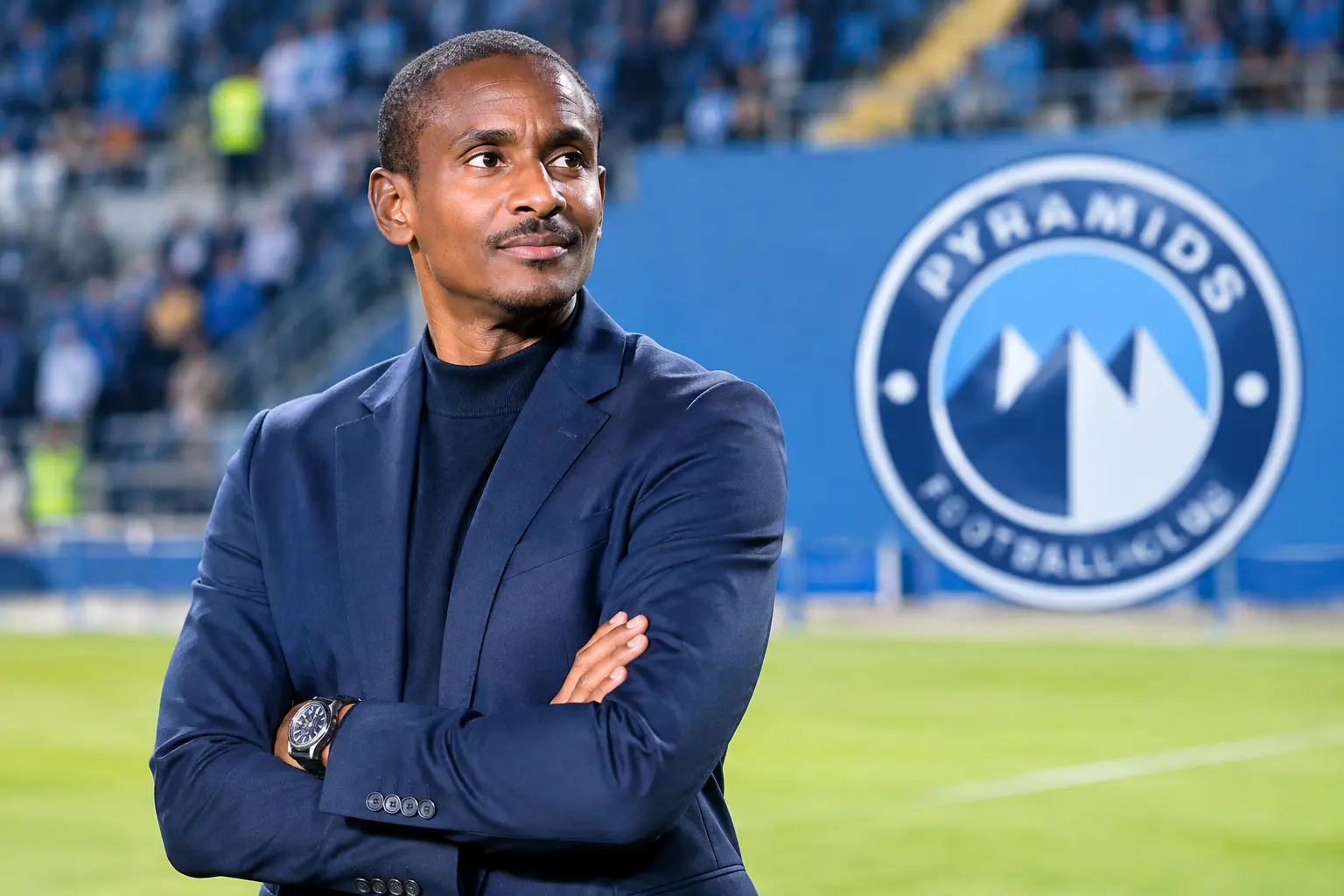
  • Rulani Mokwena wins eight consecutive games at Pyramids FC

    Rulani Mokwena wins eight consecutive games at Pyramids FC

    South African coach Rulani Mokwena has started his Egyptian adventure with a winning run, with Pyramids FC picking up their first eight official victories in their history.

    Their latest triumph came in their 3-2 Egypt League Cup win over Olympic El Qanah on 7 October 2026.

    That victory gave Mokwena his first victory in his Egyptian club career and Pyramids have since chalked up 19 goals and conceded only four goals in their opening eight matches.

    The 39-year-old has also steered the club to five straight Egyptian Premier League wins, earning 15 points from 15 on offer and sitting top of the table ahead of traditional giants Al Ahly and Zamalek, according to reports published this week.

    It’s good news for South African football fans, who can take comfort that one of their most high-profile coaches is enjoying early success.

    Pyramids FC hold on to 3-2 win in League Cup encounter

    Pyramids picked up their opening League Cup win with a 3-2 victory over Olympic El Qanah, despite having to withstand a gutsy second-half comeback from their opponents.

    Nadhir Benbouali gave Mokwena’s men the perfect start by scoring in the first minute and the hosts were two up by the 40th minute when Abdel Rahman Magdi added a second.

    Mohamed El Shebiny pulled a goal back for the visitors in the 57th minute and though Ali Hamouda restored Pyramids’ two-goal advantage in the 76th minute, Hazem Abosena scored in the 83rd minute to make it 3-2.

    Mokwena’s charges held on to take the three points and extend their winning streak.

    While the 3-2 scoreline was less than comfortable for the hosts, their resilience in seeing out the game was a positive sign as they look to extend their winning run in the coming fixtures.

    Eight matches, eight wins in Mokwena’s opening campaign

    Mokwena’s victory over Olympic El Qanah represented his eighth consecutive victory in official matches as the coach of Pyramids FC.

    A summary of his team’s performance across those eight matches is shown below.

    Pyramids FC record (eight matches)

    Matches played 8

    Wins 8

    Draws 0

    Defeats 0

    Goals scored 19

    Goals conceded 4

    Clean sheets 5

    The stats tell the story of a side capable of scoring freely while keeping their opponents at arm’s length.

    While Pyramids have shown they can put together a consistent attacking display to score 19 goals in those eight matches, their ability to defend their lead will be crucial to their progress.

    They have only allowed four goals in their opening eight matches, keeping five clean sheets.

    The challenge for Mokwena will be to sustain this level of performance across their 2026/2027 campaign.

    Pyramids FC top the Egyptian Premier League

    Mokwena has been in fine touch as Pyramids have begun their Egyptian Premier League campaign with five consecutive victories.

    They have 15 points from their first five matches, including wins against Ghazl El Mahalla, Abou Qir Fertilizers, Al Masry, El Gouna and ENPPI.

    The result puts them top of the league table above traditional Egyptian powerhouses Al Ahly and Zamalek, who have both suffered early defeats.

    For a club with ambitions of success in Egypt, those early results give a solid platform upon which to build.

    With the season only just beginning, the early league table will be reshuffled as teams get under way.

    But Pyramids will be looking to continue their winning ways as they enter the more demanding part of their schedule.

    Why Mokwena’s early success matters

    Mokwena’s success in Egypt is a source of celebration in South Africa, where he has forged a reputation as one of the most successful coaches in the history of the PSL.

    He has built that reputation by coaching some of the country’s biggest clubs, including Mamelodi Sundowns and Orlando Pirates.

    Moving to Pyramids FC is the latest development in a glittering coaching career, but it does present new challenges.

    Being abroad exposes a coach to a new set of tactical and psychological challenges.

    The early results are a promising sign, but Mokwena and his players will need to prove they can respond to adversity.

    Can Pyramids pick up where they left off?

    For now, Mokwena can reflect on eight straight victories in his charge’s opening campaign.

    Their attacking prowess has been in evidence, but the true test will be whether they can keep their opponents at bay.

    They’ll be looking to make their home advantage count again when they face Ceramica Cleopatra in Egyptian Premier League action on Monday, 12 October 2026.

    What’s next for Rulani Mokwena?

    For now, Mokwena can enjoy the feeling of a successful start to his Egyptian adventure.

    His team have won eight of their opening eight matches, boasting a deadly attacking line and an outstanding defence.

    They have set the club up nicely for the coming months, both domestically and in continental competition.

    South African football fans will be hoping they maintain their league lead and continue to enjoy continental success for the coming months.

    Eight wins are a great start, but we’ll have to wait and see what the long-term impact of Mokwena’s work will be.

    Editorial and fact-checking note: This article is based on published match reports and the supplied information about Pyramids FC’s results. Statistics and league positions reflect the reported position following the 7 October 2026 League Cup fixture and should be updated as further matches are played.

    Corrections policy: Material factual errors will be corrected when identified. Subsequent results, changes in league position and verified team announcements should be incorporated into future updates.

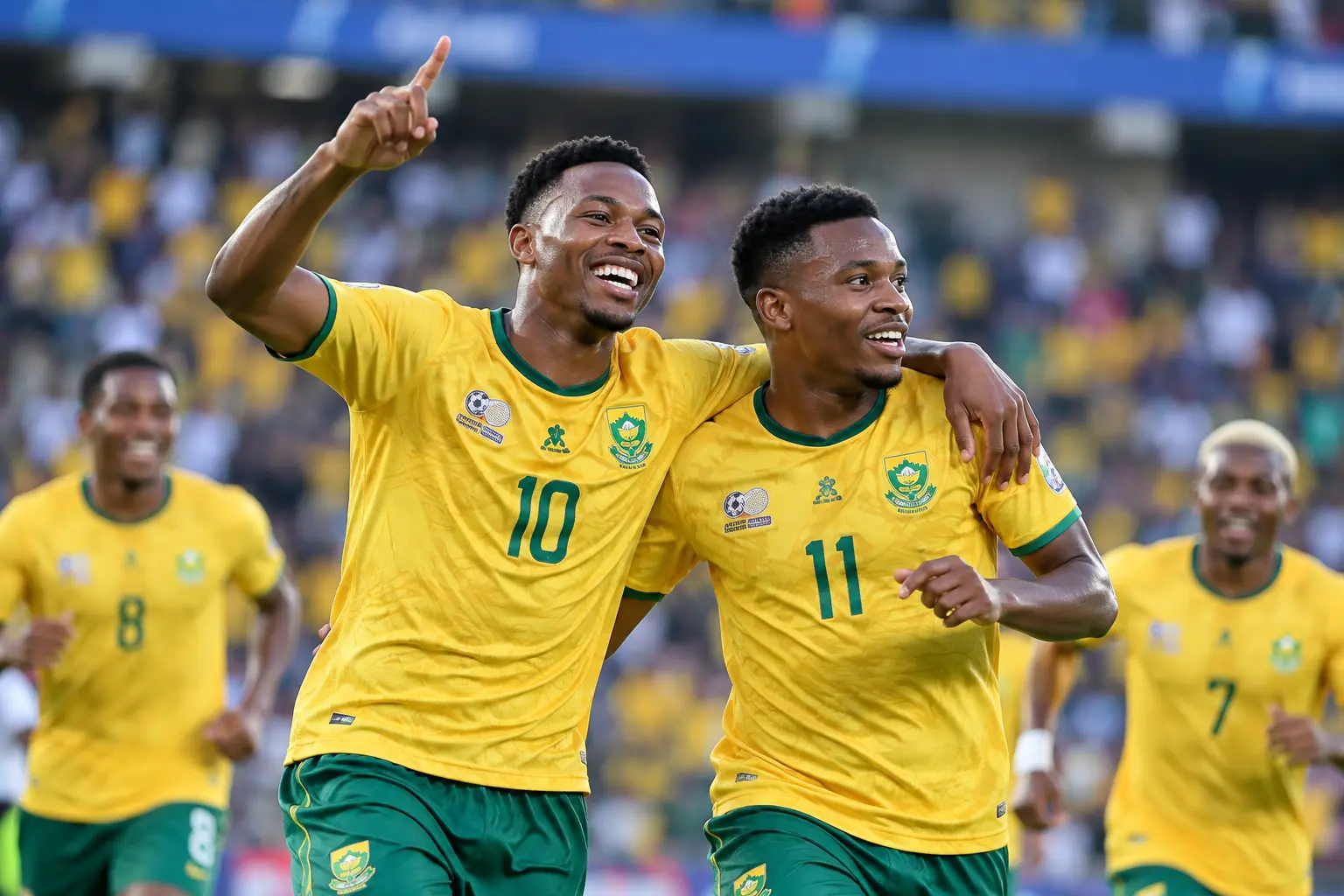
  • Bafana Bafana Starting XI Confirmed for Egypt Clash in Cairo

    Bafana Bafana have named their starting XI for the clash against Egypt, with South Africa set to face the hosts at the Cairo International Stadium.

    The match is scheduled to kick off at 20:00.

    Bafana Bafana Starting XI

    South Africa will start with:

    Goalkeeper:

    • Chaine

    Defenders:

    • Matuludi
    • Seema
    • Okon
    • Basadien

    Midfielders:

    • Poggenpoel
    • Sithole
    • Matthews
    • Dithejane

    Attackers:

    • Singh
    • Mailula

    Match Details

    DetailInformation
    MatchBafana Bafana vs Egypt
    VenueCairo International Stadium
    Kick-off20:00
    South Africa XIChaine, Matuludi, Seema, Okon, Basadien, Poggenpoel, Sithole, Matthews, Dithejane, Singh, Mailula

    The confirmed line-up sees South Africa take on Egypt in Cairo with the selected XI tasked with delivering a strong performance away from home.

  • South Africa U23 Fight Back to Beat Algeria 3-1 After Second-Half Comeback

    South Africa U23 Fight Back to Beat Algeria 3-1 After Second-Half Comeback

    Second-half goals from Quwan Plaatjies, Nhlanhla Gasa and Faiz Abrahams helped South Africa’s U23 side turn the game around to beat Algeria 3-1 after going into the break trailing to Yanis Senhadji’s first-half strike.

    The hosts’ 3-1 victory over Algeria was rounded off with a stunning finish from Nhlanhla Gasa during the second period.

    Algeria’s first-half opener from Senhadji looked to have handed the visitors all three points.

    However, Raymond Mdaka’s men showed a different side to their game after the restart, scoring three unanswered goals during the second period.

    Plaatjies put South Africa back on terms before Gasa netted a second goal to put the hosts ahead at the break.

    Abrahams struck late on to complete a wonderful turnaround as South Africa moved from a goal behind to a two-goal winning margin.

    South Africa turn the game around

    The game looked to be heading towards a 1-0 win for Algeria after Senhadji opened the scoring for the visitors during the first period.

    However, South Africa started the second period brightly and were able to turn the game around in a stunning display of football.

    The three unanswered goals scored by Mdaka’s men ensured that Algeria were unable to protect their advantage.

    Plaatjies, Gasa and Abrahams all found the scoresheet for a rampant home side during the match.

    Full-time result

    South Africa U23 3-1 Algeria U23

    South Africa scorers:

    Quwan Plaatjies

    Nhlanhla Gasa

    Faiz Abrahams

    Algeria scorer:

    Yanis Senhadji

    South Africa’s 3-1 win over Algeria gives Mdaka’s men a wonderful victory after fighting back from behind to score three unanswered goals during the match.

  • Raymond Mdaka Moves From Amajita Glory to South Africa’s U23 Olympic Mission

    Raymond Mdaka’s work with South Africa’s junior national teams has entered a new phase. After guiding Amajita to the 2025 U20 Africa Cup of Nations title, helping the team reach the FIFA U20 World Cup, and leading South Africa to a third consecutive COSAFA U20 crown in September 2026, Mdaka is also overseeing the country’s U23 side as it begins its campaign towards the Los Angeles 2028 Olympic Games.

    The latest COSAFA success came on 27 September 2026, when South Africa defeated hosts Mozambique 2-1 in Maputo. The victory not only retained the regional title but also secured Amajita’s place at the 2027 U20 AFCON in Ghana, where South Africa will arrive as defending champions.

    Mdaka’s responsibilities now extend beyond the U20 age group. South Africa’s U23 team is already preparing for the qualification route to the 2028 Olympics, with Mdaka having been appointed to lead the side and having already conducted selection and preparation camps.

    Amajita’s rise under Mdaka

    The foundations of Mdaka’s current reputation were built through a series of significant results with Amajita.

    In 2024, South Africa won the COSAFA U20 Championship by beating Zambia 2-0 in the final. It was the country’s ninth title in the competition at the time.

    The following year brought a much bigger breakthrough.

    South Africa won its first-ever U20 Africa Cup of Nations title in May 2025, defeating Morocco 1-0 in the final in Cairo. Gomolemo Kekana scored the decisive goal in the second half.

    The continental triumph also earned South Africa a place at the 2025 FIFA U20 World Cup in Chile. FIFA confirmed that South Africa qualified for the global tournament alongside Morocco, Egypt and Nigeria as Africa’s four representatives.

    That sequence gave Amajita experience at regional, continental and global level.

    Another COSAFA title in 2026

    South Africa’s latest regional success came in September 2026.

    Amajita entered the COSAFA U20 tournament as defending champions and completed the competition with five wins from five matches. In the final, played in Maputo on 27 September, South Africa beat Mozambique 2-1. Oarabile Booysen and Steven Mendes scored for South Africa.

    The victory represented another important step in the development programme because the regional tournament also served as a route into the following year’s continental championship.

    By reaching the final, South Africa secured qualification for the 2027 U20 AFCON in Ghana before going on to win the regional trophy.

    For Mdaka, the immediate U20 challenge is therefore not finished. Amajita will now prepare to defend the continental title they won in Egypt in 2025.

    The U23 assignment is already under way

    While Mdaka continues his involvement with Amajita, he has also taken charge of the South African U23 national team.

    The U23 programme is centred on the qualification route to the Los Angeles 2028 Olympic Games. In July, Mdaka explained that the team had begun preparations for the Olympic qualifying campaign and assembled a 33-player selection group.

    The U23 programme is therefore not simply a future possibility. It is already an active national-team responsibility.

    In September, Mdaka named a U23 squad for two international friendlies against Algeria, scheduled for 30 September and 3 October in Durban.

    The squad includes several players familiar from the U20 setup, reflecting the connection between the two development levels.

    Why the U20-to-U23 pathway matters

    One of the most important features of Mdaka’s current assignment is the opportunity to continue working with players as they progress through the national-team system.

    The U23 squad has been built partly around players who were involved with the U20 side that won the continental title and competed at the FIFA U20 World Cup. Mdaka said earlier in 2026 that the U23 group was being formed around those players while also looking at footballers who had not previously been part of the national-team setup.

    That creates continuity between the age groups.

    Players who have already experienced international football at U20 level can potentially carry that experience into the U23 environment, while the coaching staff can assess a wider pool of players competing in South Africa’s professional leagues.

    The Olympic qualification challenge

    The U23 programme has a specific long-term objective: reaching the 2028 Olympic Games in Los Angeles.

    The qualification route runs through the African U23 competition structure. Current reporting on the qualification process indicates that the African qualifiers lead towards the U23 AFCON, with the tournament providing the route to the Olympics.

    That gives Mdaka a different type of challenge from the U20 competitions.

    At U20 level, his immediate priorities have included developing young players and competing in COSAFA and CAF competitions. With the U23 team, the programme is tied directly to Olympic qualification and requires building a squad capable of progressing through a longer qualification process.

    From regional success to a broader development pathway

    Mdaka’s recent record has placed significant attention on South Africa’s junior national teams.

    The 2025 U20 AFCON victory was historic because it gave Amajita their first continental title.

    The 2026 COSAFA triumph then extended South Africa’s regional dominance, with the team retaining the championship for a third consecutive year.

    The next stage is more complicated.

    The U20 team must prepare for the 2027 AFCON in Ghana, while the U23 side is working towards Olympic qualification. Both programmes require player development, squad selection and sufficient preparation time.

    Mdaka himself has stressed the importance of preparation ahead of the next U20 AFCON, saying the team needs more time to prepare for the continental tournament.

    What comes next for Mdaka?

    The immediate calendar illustrates the scale of the assignment.

    Amajita have just returned from Mozambique after winning the COSAFA title and securing qualification for the 2027 U20 AFCON. The U23 side, meanwhile, is preparing for its two matches against Algeria at the end of September and beginning of October.

    The U20 team will subsequently turn its attention towards Ghana and the defence of its continental crown.

    For the U23 side, the focus is the Olympic qualification pathway and the development of a squad capable of competing for a place at Los Angeles 2028.

    The two responsibilities give Mdaka an unusually broad role within South Africa’s youth national-team structure.

    A development story beyond the trophies

    The most significant part of Mdaka’s recent work is not simply the number of trophies attached to his name.

    His teams have provided a pathway through which young South African players have gained experience at COSAFA, AFCON and FIFA World Cup level. Several of those players are now appearing in the U23 setup, giving the national development system an opportunity to build continuity between age groups.

    That pathway will now be tested at a higher level.

    Amajita have a continental title to defend in Ghana, while the U23 side has an Olympic qualification campaign ahead.

    For Mdaka, the next chapter is therefore less about looking back at the trophies already won and more about managing two development programmes with different competitions, age groups and objectives.

    Sources

    This article was independently written using information from CAF, COSAFA and South African sports reporting. Key results and tournament qualification claims were checked against CAF and COSAFA’s published reports.

    Editorial policy

    Our sports reporting aims to provide factual, independently written coverage using primary sporting bodies and reputable reporting where available. We distinguish confirmed results and appointments from commentary or future possibilities.

    Corrections policy

    If a material factual error is identified, it will be checked against the relevant football governing body or other authoritative source and corrected. Significant corrections will be clearly reflected in the article.

    Disclaimer

    Future fixtures, qualification arrangements, squads and tournament schedules can change. This article does not predict the outcome of South Africa’s Olympic qualification campaign or future competitions. Readers should verify the latest fixture and competition information with SAFA, CAF and COSAFA.

  • Bafana Bafana Player Ratings: Okon and Kabini Lead South Africa Past Guinea

    Bafana Bafana Player Ratings: Okon and Kabini Lead South Africa Past Guinea

    Bafana Bafana started their 2027 Africa Cup of Nations qualifiers with a 2-1 win against Guinea on Saturday, September 26, 2026. Goals from Ime Okon and sub Samukele Kabini secured a hard-fought Group D victory.

    The Soweto match also marked Pitso Mosimane’s coaching return to the Bafana Bafana as the men in red and gold began a new chapter under the familiar guidance.

    South Africa dominated large chunks of the match before half-time but Guinea equalised straight after the restart and forced Bafana to rely on the bench. Kabini eventually won it for Bafana in the 77th minute of action.

    This article takes a different approach to traditional player ratings, by highlighting a player’s overall contribution to the match rather than just their goal-scoring or assist numbers.

    The big picture from Bafana’s display

    South Africa’s performance contained two contrasting halves.

    The first was the defensive and midfield organisation that frustrated Guinea for much of the match, and the second was the attacking intensity of men like Oswin Appollis and Relebohile Mofokeng.

    The match also highlighted the value of Bafana’s subs. Kabini scored after coming on, while Yanela Mbuthuma played a key role in setting up the winning goal.

    Both combined to ensure South Africa took three points despite Guinea fighting back.

    Bafana Bafana player ratings

    Ronwen Williams — 7/10

    Williams did not have to make a string of saves, but he was an ever-present threat behind the Bafana Bafana attack.

    His experience was vital in steadying the ship when the visitors threatened to take control of the match after the break.

    Verdict: Solid presence in goal.

    Kamogelo Sebelebele — 6.5/10

    Sebelebele faced a tough test from the Guinea attackers and combined defensive awareness with plenty of energy to keep Bafana’s backline intact.

    He gave his all in the match and played a key role in Bafana’s narrow win.

    Verdict: Deserved defensive work rate against a strong Guinea attack.

    Ime Okon — 7.5/10

    Okon was one of Bafana’s shining lights in the match, playing a key role at both ends of the pitch.

    Not only did he help to frustrate Guinea’s attack, but he also opened the scoring for South Africa. That put Bafana in control of the match.

    His partnership with Olwethu Makhanya also provided much-needed stability in Bafana’s backline.

    Verdict: Key performer at the back and in attack.

    Olwethu Makhanya — 7/10

    Makhanya kept his composure alongside Okon and provided stability at the heart of Bafana’s defence.

    He was particularly important in South Africa’s 1-0 first-half lead, as he held possession and organisation.

    Verdict: Strong, reliable display between the sticks.

    Aubrey Modiba — 5/10

    Modiba struggled to make an impact in the match, and he did not reach the same levels as some of his midfield colleagues.

    He eventually had to be substituted in the second half of action.

    Verdict: Quiet performance before making way for a sub.

    Sphephelo Sithole — 6.5/10

    Sithole’s role was more about defensive organisation than goalscoring. He provided cover in front of Bafana’s backline and ensured the team kept possession while pressing the opponent.

    Verdict: Useful defensive cover in midfield.

    Teboho Mokoena — 7.5/10

    Mokoena was one of Bafana’s standout performers in midfield, using his energy to dictate the tempo of the match.

    His energy helped Bafana to dominate possession in the final third and ensure South Africa won the game.

    Verdict: Played a key role in South Africa’s midfield.

    Thapelo Maseko — 6.5/10

    Maseko was a constant menace on the wing, using his pace and power to stretch Bafana’s defence.

    His work-rate created numerous chances, but those chances failed to lead to a goalscoring opportunity.

    Verdict: Had an impact on the game, but not always in the final third.

    Relebohile Mofokeng — 7/10

    Mofokeng was willing to take responsibility in attack and caused numerous problems for the Guinea defender.

    He threatened early on and forced a string of saves, but Mofokeng’s movement also created chances for his teammates.

    Verdict: A lively display, but the finishing touch was missing.

    Oswin Appollis — 7.5/10

    Appollis was one of the most influential attackers in South Africa’s 2-1 win. His close control and pace regularly caused problems for the backline of Guinea.

    He also created several chances rather than taking them himself.

    Verdict: One of Bafana’s standout performers in attack.

    Iqraam Rayners — 5/10

    Rayners did not have too many opportunities to finish, which limited his impact on the game.

    However, his efforts off the ball created numerous chances, but he did not get enough service to finish.

    Verdict: Hard work without reward in front of goal.

    The substitutes had a huge impact

    The substitutes made the difference in South Africa’s win against Guinea.

    Samukelo Kabini — 7/10

    Kabini was a substitute who provided exactly what a manager wants from a player on the bench.

    He put Bafana ahead in the 77th minute after coming onto the pitch and scored his first goal for Bafana Bafana.

    Verdict: Decisive substitute who scored the winning goal.

    Yanela Mbuthuma — 6/10

    Mbuthuma added energy after coming onto the field, and his most important contribution came when he created the chance for Kabini’s winning goal.

    Verdict: Made a useful impact after coming onto the field.

    Later substitutes

    Thapelo Morena, Luther Singh and Bathusi Aubaas were brought on late in the game and did not have much impact. They are therefore not given individual ratings.

    What the Guinea match reveals about Bafana

    The win contained several talking points for South Africa.

    Defence remains an important foundation

    Okon and Makhanya provided a solid base at the back, holding possession and creating opportunities for the Bafana Bafana attackers.

    Okon also showed that Bafana’s defenders can score from set pieces and open play.

    The midfield remains central to the team’s control

    Sithole and Mokoena may have had slightly different roles, but they both contributed to Bafana’s success in midfield.

    Their energy and organisation kept possession of the ball and ensured the team got into good attacking positions.

    South Africa still needs greater attacking efficiency

    Bafana created plenty of chances through Mofokeng, Appollis and Maseko, but too often those attacks failed to deliver a shot on goal.

    Rayners also worked hard, but he did not get near enough service to finish.

    The bench proved valuable

    The subs made the difference against Guinea, with Kabini and Mbuthuma combining to score the winning goal.

    Bafana Bafana ratings at a glance

    | Player | Rating | Main contribution |

    | ——————- | —–: | ——————————— |

    | Ronwen Williams | 7/10 | Goalkeeping and leadership |

    | Kamogelo Sebelebele | 6.5/10 | Defensive work |

    | Ime Okon | 7.5/10 | Defensive stability and goal |

    | Olwethu Makhanya | 7/10 | Centre-back partnership |

    | Aubrey Modiba | 5/10 | Limited overall influence |

    | Sphephelo Sithole | 6.5/10 | Midfield protection |

    | Teboho Mokoena | 7.5/10 | Midfield control and energy |

    | Thapelo Maseko | 6.5/10 | Pace and width |

    | Relebohile Mofokeng | 7/10 | Attacking threat |

    | Oswin Appollis | 7.5/10 | Creativity and attacking pressure |

    | Iqraam Rayners | 5/10 | Pressing and work rate |

    | Samukelo Kabini | 7/10 | Winning goal |

    | Yanela Mbuthuma | 6/10 | Assisted winning move |

    How these ratings were assessed

    These are editorial performance ratings, rather than official statistical scores.

    The assessment considers a player’s impact on the match, defensive responsibility, attacking contribution, decision-making, work rate and overall effect on the result.

    A high rating does not necessarily mean a player scored a goal, and a low rating does not automatically indicate that they played poorly in all aspects of the game.

    This distinction is important when reviewing player ratings, as different analysts can reasonably reach different conclusions regarding the same match performance.

    What comes next for Bafana Bafana?

    South Africa got an important boost in their 2027 AFCON Group D campaign with their win against Guinea.

    But the challenge now is to maintain the defensive organisation shown in this match while becoming more efficient in attack.

    Supporters will judge the new Mosimane era not only on individual performances, but also on whether the team can consistently produce positive results in the qualifying campaign.

    Source and verification

    Match result, competition, date and key goal events were verified against current match reporting from SABC Sport, SuperSport and other match-data sources.

    The individual ratings in this article are editorial assessments based on the supplied player-rating information and are not presented as official ratings from the PSL, SAFA or a statistical provider.

    Editorial policy

    Our football coverage aims to provide original, useful reporting rather than repeating team announcements, match reports or other publishers’ wording. Facts are separated from editorial analysis, and subjective player ratings are clearly identified as such.

    Fact-checking policy

    Match result, competition, scoring events and player involvement are verified against match records and reputable football reporting. Where a rating represents editorial judgement, it is identified as an assessment rather than an objective statistic.

    Corrections policy

    If a factual error is identified, the article will be reviewed against reliable match records and corrected where necessary. Corrections affecting significant match information should be clearly reflected in the published article.

    Disclaimer

    Player ratings are subjective football analysis and should not be interpreted as official statistical scores. Different analysts may reasonably reach different conclusions about individual performances. Match information can also be updated as official records are corrected or expanded.

  • AmaZulu Beat Polokwane City 1-0 to Move Level With Orlando Pirates

    AmaZulu Beat Polokwane City 1-0 to Move Level With Orlando Pirates

    AmaZulu Make It Three Straight, Nick Polokwane City to Pull Level With Pirates

    AmaZulu just keep winning. Saturday brought a third league victory in a row, a 1-0 job away at Polokwane City, and it’s carried Usuthu right into the mix at the top of the Betway Premiership. The win, at the Old Peter Mokaba Stadium on 19 September 2026, put them on 16 points from seven games, level with Orlando Pirates in second.

    The goal

    Thandolwenkosi Ngwenya got it, and he didn’t hang about either. The Zimbabwean struck early, rising to head home from a set-piece after Nkosikhona Radebe floated the ball in, per the PSL. That was the lot. One goal, three points.

    Ngwenya, again

    He’s been the name on everyone’s lips through AmaZulu’s opening run, and here was another reason why. His header early on gave the visitors the lead, and in the end it decided the whole thing. Score like he’s scoring and you become the talking point, simple as that — right now that’s Ngwenya.

    Hanging on

    A one-goal lead is never comfortable, and the closing stretch tested them. Polokwane City came looking for a leveller, carved out a few half-chances, but Usuthu’s back line refused to budge and saw it through to the whistle. Hard-fought, the PSL called it. Fair enough. And it’s now three league wins on the trot.

    What it does to the log

    Those three points nudge AmaZulu up to 16 from seven, third on the table and dead level with Pirates above them. Polokwane City, on the other hand, are left stuck on seven points from their seven games, down in eighth.

    Full-time

    Polokwane City 0-1 AmaZulu FC
    Goal: Thandolwenkosi Ngwenya
    Betway Premiership, Matchday 7 — 19 September 2026, Old Peter Mokaba Stadium

    Three on the bounce, then. AmaZulu will back themselves to keep it rolling while the early-season picture is still taking shape.


    Source: Based on the Betway Premiership Matchday 7 fixture between Polokwane City and AmaZulu FC on 19 September 2026, and Premier Soccer League reporting on the goal, the result and the standings.

    Editorial policy: Our match coverage reports scores, scorers and standings as officially recorded, and attributes match detail to the relevant source. We don’t add events or statistics that haven’t been reported.

    Corrections policy: If we get a fact wrong, we check it against the official match record or an authoritative source and fix confirmed errors promptly, flagging the significant ones where it matters.

    Disclaimer: Match details and standings reflect the position at the time of writing and may change as more fixtures are played and results confirmed.

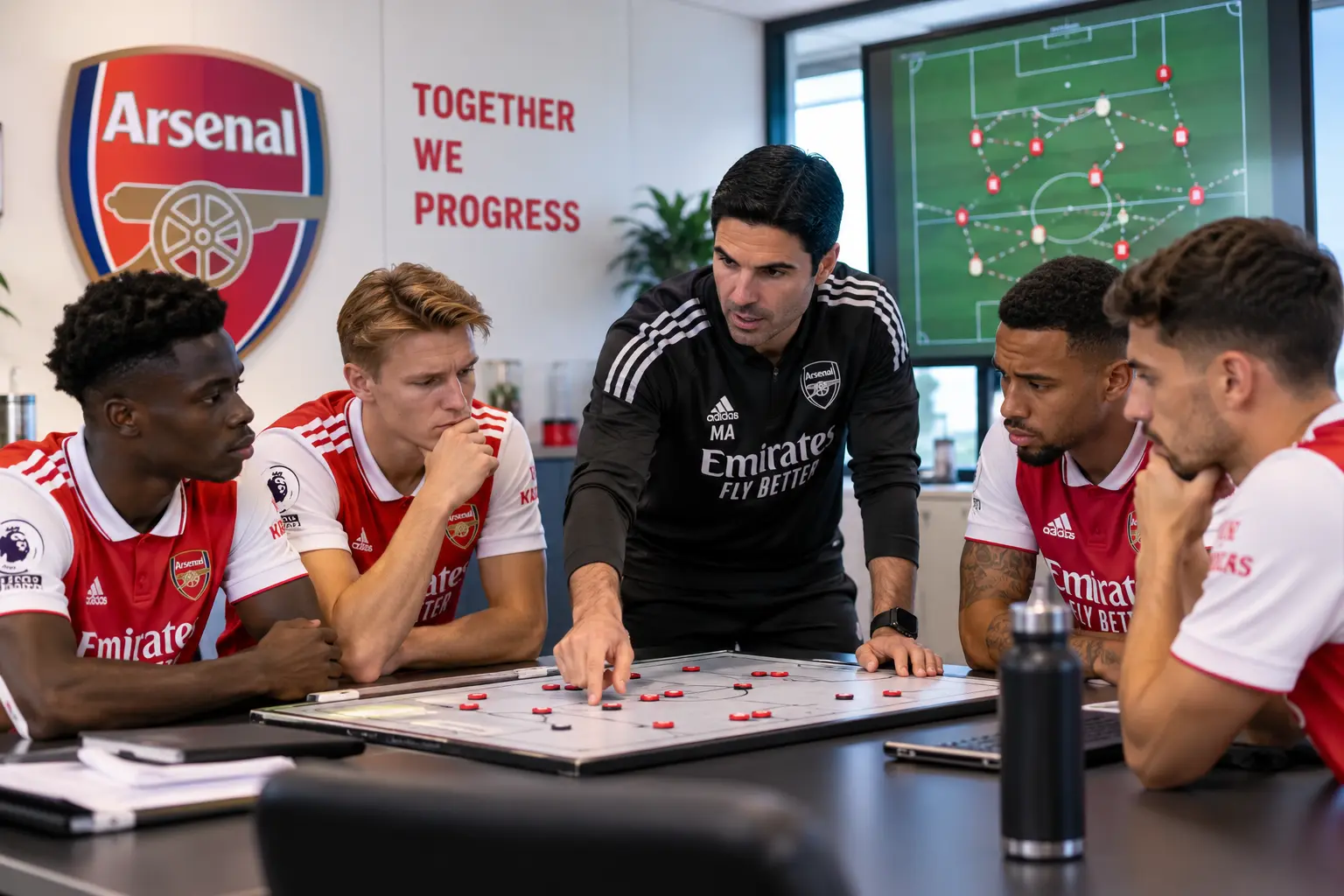
  • Can Arsenal be stopped this season? What do their early tactics tell us?

    Can Arsenal be stopped this season? What do their early tactics tell us?

    While it is a perfect start to the new season, three league games are far from sufficient in determining how good the new Arsenal will turn out to be.

    They have won all three league matches (scoring 6 goals and conceding only 1) as well as the Community Shield against Manchester City, giving them 4 wins from their first four competitive matches, with 9 goals scored and only 1 conceded.

    The stats aren’t lying.

    The more interesting thing to talk about, however, is why Arsenal have been so hard to beat.

    There are some clues as to why that is.

    They are very limited in what opportunities they are giving to the opposition to counter into.

    Their press is designed to stop passing options rather than chasing down their opponents.

    They have brought quality in their attack.

    But there are also questions.

    Can teams get through the press? What happens when Arsenal have to chase? And perhaps most importantly, will the recent change in referee rules concerning holding and blocking at set pieces impact their biggest weapon?

    We can’t answer those questions with only three games.

    We can, however, identify a few things to be on the look out for.

    Arsenal’s shape when they have the ball

    One of the first observations to make is what happens when Arsenal start building up from deep.

    Declan Rice frequently drops into the box, allowing the centre-backs to move out wider, providing an extra man in the first line of construction.

    It gives Arsenal a simple advantage.

    If the opposition send one forward to try and press, they have multiple options at the back, meaning they can switch the ball around the first line, rather than looking to beat the player with the ball right away.

    In front of that first line, Arsenal typically keep a player in the middle while the wide players and fullbacks operate in pairs.

    One player can be drawn in on the touch line while the other swings inside, and then those positions can be swapped.

    That creates a problem for defenders.

    If they follow the player coming inside, the space can be exploited outside.

    If they keep up with the wide player, Arsenal can find the player inside.

    Martin Ødegaard’s movements make this even harder.

    He will generally move into the side where Arsenal have the ball, presenting a further passing option in the area of the opponent’s block.

    That can create a numerical advantage for Arsenal around the ball.

    When the opposition move across to deal with that, the ball can be switched into the space on the other side.

    Why Arsenal are difficult to counter

    There is one other thing to note, which is easily overlooked.

    When Arsenal attack, they are not leaving six players behind the ball.

    They tend to keep six players behind the ball.

    It gives the protection should possession be lost.

    This is an important point since a good attacking structure is not necessarily just about attacking chances.

    If a team is going to lose the ball, it needs to have the players in positions to recover it.

    The position Arsenal adopt means there is typically little space for the opposition to work in.

    That means, even when Arsenal’s attack fails, they can be in a position to recover possession straight away.

    This is why their structure and their press are so interconnected.

    Arsenal don’t always press the player

    Another good thing to watch is their defensive work.

    Against Aston Villa, Arsenal’s forwards didn’t necessarily simply sprint towards whoever had the ball.

    They took up positions to deny passing options.

    By approaching the ball at an angle, a forward can deny a defender the chance to pass to another centre-back.

    A second player can also deny the route to the fullback.

    Meanwhile, the striker can set himself up in a way that makes it difficult for the holding midfielders to receive the ball facing goal.

    It means Arsenal don’t necessarily need to win the ball straight away, but they can make the next pass difficult.

    It is important to note that a team can appear to be not aggressively pressing because the man with the ball has time.

    But if three or four of his options have gone, the pressure is still working.

    Arsenal are often pressing the pass as well as the man.

    The new attacking question

    There has been an interesting change in Arsenal’s attacking options.

    Gabriel Martinelli’s departure has meant they have lost a player who threatened to get behind the defence and attack the space.

    But Christos Solis’ arrival provides a different attacking profile.

    Rather than staying wide, he is more comfortable coming inside, and working between the fullback and centre-back.

    It means the relationships around him change.

    A midfielder may come inside with him, opening up a different passing lane if the ball is played quickly forward.

    It isn’t about whether Solis is better or worse than the player he has replaced.

    He is different.

    And that can have an impact on the entire structure of an attack.

    It is far too soon to make judgements on the basis of the few games we have seen, but his positioning is worth watching as the season progresses.

    Arsenal’s biggest weapon may be the one teams cannot prepare for easily

    Set pieces have been crucial to Arsenal’s attacking success.

    Last season they scored 19 Premier League goals from corners (according to the numbers in the analysis) with the focus on movement, blocking and timing.

    The most recognisable feature of their corner routines is a group of Arsenal players getting close to the ball before suddenly spreading out in different directions.

    It means the defenders must make quick decisions about who they follow, who stays and who tracks their striker.

    That can open up space for Arsenal.

    Declan Rice has been involved in taking a number of their corners.

    The issue is that the rules and emphasis around set piece holding and blocking have changed.

    Premier League referees have been instructed to take a stricter approach to these situations and penalties will be given if the specified offences occur inside the penalty area.

    It could impact Arsenal more than most because set pieces have been so important to their attack.

    Once again, we can’t really make any definitive statements about that based on the few matches we have seen.

    That is something we’ll only be able to assess after a lot more games.

    There is another Arsenal question: the bench

    The strength of the Arsenal squad could become a factor.

    They have invested heavily this summer and added players who can change games from the bench.

    That gives the manager options that weren’t necessarily available to him last season.

    The entire nature of a match can change depending on the substitutions made in attack.

    A fresh winger can stretch a fatigued fullback, a midfielder can alter the tempo, and a player comfortable receiving between the lines can give Arsenal another option to get into the box.

    This is important because Arsenal haven’t really had to chase a game yet.

    They have been behind for only around 23 minutes of their matches, all at Chelsea.

    That is such a small sample size.

    We really haven’t seen what this version of Arsenal is like when the game plan isn’t working and they have to force the issue for an hour or so.

    There are already small weaknesses

    The clean sheet record looks fantastic, but Arsenal have given teams a couple of glimpses.

    Chelsea’s goal came early.

    A free kick was cleared but the ball dropped around the edge of the penalty area, where Arsenal’s midfield structure was high and narrow, leaving space.

    Chelsea were able to attack it.

    They also found themselves in a similar situation later in the match, with an effort hitting the post and forcing a save.

    Then there was Aston Villa.

    Despite the early goal, they managed to get behind Arsenal’s press with a long ball into a wide area.

    For a few seconds, Arsenal were exposed because the winger was wide and high while Saka had come forward to press.

    Villa briefly had a four-against-four situation.

    But Arsenal recovered quickly and they weren’t able to replicate it.

    That may be the key takeaway from those moments.

    The vulnerability is there, but the question is whether teams can exploit it.

    The unanswered questions

    We don’t know a number of things.

    William Saliba hasn’t played a minute this season, yet Arsenal have only conceded once.

    Rice and Lewis-Skelly have done a large portion of the midfield work, while one of the most important players they bought in the summer has yet to establish himself in the XI.

    And Arsenal have not had to chase a match for any length of time.

    That last point is particularly significant.

    A team can be very different when it has the lead and can play with time to think, compared to when it is 1-0 down in the 70th minute and the opposition decides just to sit and defend.

    We haven’t really seen that Arsenal yet.

    So, can Arsenal be stopped?

    Of course they can.

    Every team can, but the early signs suggest that it will require opponents to solve a number of issues simultaneously.

    They have to find a way to get around the press.

    They have to deal with the way Arsenal rotate in possession.

    They must prevent Arsenal from controlling the space behind the first press.

    And the need to defend set pieces without getting drawn all over the pitch.

    There are problems there as well.

    The space left behind an aggressive press can be exploited with accurate long balls, as Chelsea demonstrated.

    There can be space around the edge of the box, as Arsenal showed.

    And the new rules around set pieces could force them to modify some of their routines.

    But four competitive matches are far too small a sample to make any definitive statements.

    Arsenal have had a perfect start and so have Manchester City (who have also won their first three league matches), and right now City are above Arsenal on goal difference.

    The real test will come when teams have had more time to study these patterns, injuries change things, and Arsenal have to adapt to a difficult game.

    For now, the early signs are encouraging.

    Arsenal are not simply winning, they are forcing their opponents to work very hard to find a way in.

  • How to Analyse a Football Match: A Simple Guide to Understanding Tactics

    How to Analyse a Football Match: A Simple Guide to Understanding Tactics

    Watching football and analysing football are quite different things.

    When watching a match you might pick up on who scores, misses, has a good game etc. But a deeper look allows you to understand why a team is creating chances, why they are struggling to play out and what the players are doing without the ball.

    A good structure to break down a match can be split up into four main phases (in possession, out of possession, attacking transition and defensive transition) with set pieces studied separately as well.

    This first section focuses on what happens when the team has the ball.

    Start with the Build-up

    The first part to study during a match is the build-up, and what a team does when they have possession in their own half.

    Don’t focus too much on the formation they’ve written on the team sheet, but watch the positions they actually take up.

    Are the centre-backs spreading out? Is a midfielder dropping between them? Are the fullbacks playing deep or getting up? Is the goalkeeper coming out to be an additional passing option?

    All of these things can give you a good idea about what they intend on doing with the ball.

    Many teams will look to play short passes in the build-up, but not simply for the sake of it. They may be trying to draw the opposition closer to the ball in order to create space elsewhere.

    A typical example would be to be patient between their defenders and goalkeeper while the opposition’s forwards are sucked further up the pitch. This might create a midfielder to come in behind the press.

    That’s a good one to pick up.

    What is the team trying to do with the ball?

    Look at the Numbers

    One thing you will notice during the build-up is that teams like to create an extra man against the first press.

    If the opposition is sending one forward to press, they might use two players to build up around that press. If the opposition is sending two forwards to press, they might build up with a first line of three.

    This isn’t necessarily about having extra players. It’s about another passing option and being able to move the ball around and beyond the first wave of pressure.

    However, not every team is going to follow this exact pattern. The key thing is to watch what they’re actually doing rather than trying to fit it into a certain mould.

    Then Watch How the Ball Goes Through Midfield

    So now the team has got out of their press, the question is how they progress into the attacking third.

    This is where it’s worth looking out for any line breaking balls, and players moving out of position away from the ball.

    A midfielder coming in between the opposition’s midfield and defence, a winger coming inside to create an extra man centrally, a fullback stretching the defensive line forwards are all good signs of progression into the attacking third.

    Sometimes the ball goes through the middle, sometimes it goes around the outside, and sometimes a team simply plays over the midfield with a further pass.

    So when looking at a team, you might want to consider;

    • Do they like to go around?
    • Through?
    • Or over?

    There is no rule that says a team has to pick just one, and indeed most teams will vary based on how the opposition is defending.

    Pay Attention to Players Between the Lines

    One of the simplest ways to spot attacking intent is to watch for what happens in between the opposition’s midfield and defence.

    A player receiving there has the opportunity to turn and face the goal.

    But it’s what happened before he received the ball which can be interesting.

    Maybe a striker dropped towards the ball, dragging a centre-back forward.

    Perhaps a winger came inside, occupying a defender in the process.

    Perhaps a midfielder ran through the backline at just the right time.

    These movements can link up, and a player is not always moving just to receive the ball. Sometimes they’re doing it to create space for someone else. That’s a good habit to pick up when analysing football.

    Look for Rotations

    Players are not always in their starting positions.

    A winger may drift into the middle while his fullback runs outside him. A midfielder may move towards the wing, with another midfielder moving into the central position.

    These rotations can cause confusion for defenders.

    When you see this happening, you don’t want to simply describe it. Try to explain why it happened.

    Was it to create a 2v1? To pull someone out? Open up a passing lane? Was someone trying to attack the space behind the defence?

    The answer to these questions is key in understanding the team’s tactic.

    The Final Third is Where the Plan is Revealed

    Once the ball has got into the attacking third, watch how the team tries to create their final chance.

    Some teams like to combine short passes around the box, others attack quickly from the flanks and throw crosses into the box. You might see a fullback constantly overlapping a winger, and another team will like to keep their fullbacks deeper, asking the wingers to attack the space inside instead.

    There are a lot of things you can look for.

    Look out for repetitions of these things. Does the winger keep cutting inside? Does the fullback always overlap? Does the midfielder always arrive late at the edge of the box? Does the striker always move towards the post? Do these attackers always look for cutbacks instead of high crosses? This one thing might not tell you much, but if you see the same thing occur several times during a match it will almost certainly be part of the plan.

    Don’t Forget the Players Themselves

    A team’s tactics are also affected by the qualities of the players involved.

    A fast winger can force a fullback into moving into a new position, a striker comfortable dropping deep can cause problems for centre-backs and a midfielder with great passing range can allow the team to attack from further up the pitch.

    That is why two teams with similar formations can look totally different.

    The formation gives you the starting point, but what the players are doing and their qualities inform what the team is actually trying to do.

    A Simple Way to Watch a Match

    If you are new to analysis and don’t want to take on too much initially, pick one team and watch its possession.

    First, observe their shape when the goalkeeper or centre-backs have the ball, then how the midfielders are positioned. Next, look at how the team gets into the final third. Finally, see what the attackers do once they have the ball. After a few attacks, you should start seeing patterns.

    You might notice that the right fullback always moves forward when the right winger cuts inside. Or the striker always drops deep to open a space for a midfielder. These repeated actions are the ones you want to pick up on.

    The Biggest Mistake: Watching Only the Ball

    This is probably the hardest habit to break.

    When the ball is with the centre-back, it’s natural to watch it. But some of the most interesting things happen elsewhere.

    Watch the midfielder.

    Look at the winger.

    What is the striker doing?

    Is a defender getting pulled out of position?

    Sometimes the pass that breaks a defensive line is only possible because of an action that happened several seconds ago, and away from the ball.

    What Should You Write Down?

    By the end of the possession phase you should be able to answer a few basic questions.

    Build-up: How are they structuring themselves to deal with pressure?

    Progression: How do they get through the midfield and into the attacking third?

    Final third: How do they create chances?

    Player movements: Which movements do they repeat?

    Individual qualities: Which players are affecting their attacking approach?

    You don’t need complicated terminology to produce good analysis.

    If you can explain what happened, why it happened and whether the team repeated it, you’re already moving beyond simply watching the game.

    The next step is to analyse what happens when the same team doesn’t have the ball. That is when you start to look at pressing, the defensive shape, tracking runners, and how a team tries to stop their opponent progressing.

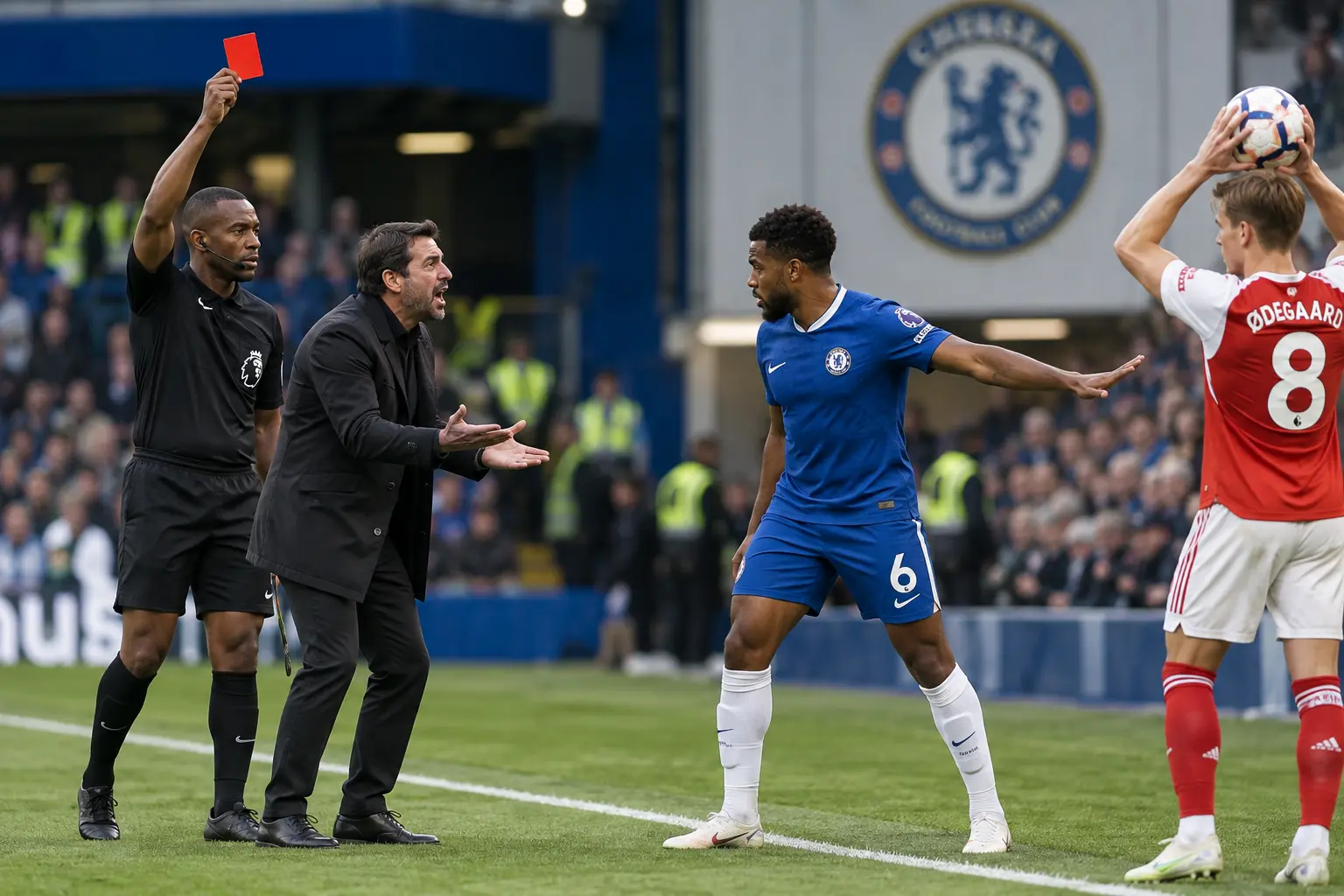
  • Defender Penalised After Blocking Throw-In as Manager Sees Red Card

    Defender Penalised After Blocking Throw-In as Manager Sees Red Card

    An unusual incident occurred on a referee where a defender was warned for getting too close to the touchline and then deliberately blocked a throw-in after.

    The incident began with a throw-in; as the defender headed towards the touchline the referee advised him to retreat. When the throw-in was eventually taken the defender headed towards the touchline once more and blocked the ball.

    The referee stopped the action and issued the defender with a yellow card.

    The situation became even more unusual when the manager appeared to express disagreement with the assistant referee and left the technical area. According to the Laws of the Game, to exit the technical area in order to express disapproval of a match official can be considered a send-off offence.

    Why was the defender given a penalty?

    The most important aspect of the incident is the code of rules pertaining to throw-ins.

    When a player is defending a throw-in they must not unfairly distract or obstruct the player taking it; this involves moving to within two metres of the spot on the touchline at which the throw-in is being taken.

    The defender had already been instructed by the referee to move away from the touchline; but when the throw was taken he returned towards the ball and interfered with it.

    The ball was in play when the defender blocked it since the throw-in had already occurred.

    That distinction is crucial.

    Why was the free kick given indirectly?

    After the ball has been returned to play from the throw-in, the offensive team are not dealt with by simply retaking the throw.

    The referee has the authority to penalise the player should he or she unfairly distract or obstruct the thrower.

    The restart in this case is an indirect free kick to be taken from the spot where the defender touched the ball, provided that the normal requirements of the Laws of the Game are satisfied.

    If the player had committed the offence before the throw-in had been taken, the referee would have halted the restart, given her a warning and asked that the throw-in be retaken.

    What makes the incident so interesting is the difference between the state before the ball begins play and after.

    What concerning the manager’s red card?

    The manager’s reaction led to another disciplinary matter.

    When the defender was cautions the manager left the technical area and obviously expressed his disapproval of the assistant referee.

    Team officials may leave the technical area in some cases, but if they intentionally do so in order to confront or show dissent towards a match official a red card will follow.

    The referee therefore had two separate incidents to deal with:

    The act of the defender obstructing the throw-in.

    The manner in which the manager treated the match official.

    Was the referee’s decision the right one?

    The referee’s decisions are in line with the relevant Laws of the Game in the light of the sequence described.

    The defender had been told to move away from the touchline but instead headed back towards the throw-in and got in the way of the ball after it had entered play.

    It means that a restart is now given as an indirect free kick rather than a retaken throw-in.

    The manager’s behaviour is also a separate disciplinary issue, and deliberately exiting the technical area with the intention of showing disapproval of an official is enough for a direct red card.

    What at first seems to be an ordinary throw-in actually becomes a complex sequence comprising player positioning, interference with a restart, disciplinary action and technical-area misconduct.

    Editorial Note

    The explanation is based on the incident and the way it has been interpreted in the source material, and finally it is up to the match officials what refereeing decisions are made, taking into account the player’s actions, the timing and the intent.

    Source

    Source: The information regarding the match incident and the refereeing has been provided for publication.

  • Pitso Mosimane returns as Bafana Bafana coach ahead of AFCON qualifiers

    Pitso Mosimane has returned to the Bafana Bafana coaching staff with the South African Football Association announcing his appointment as national team head coach today, 1 September 2026.

    SAFA unveiled Mosimane at its headquarters in Nasrec, Johannesburg following months of speculation as the National Executive Committee approved his return in August.

    The 62-year-old replaces Hugo Broos, who guided South Africa to a historic knockout stage appearance at the 2026 FIFA World Cup, and Mosimane faces an immediate challenge as Bafana Bafana’s 2027 Africa Cup of Nations qualification campaign gets underway this month.

    Mosimane begins second permanent spell as Bafana coach

    Mosimane has taken up his second permanent role as Bafana Bafana coach.

    He previously led the senior national team on two spells (2010-2012) after an interim stint in 2007, and CAF records his national-team record as 23 matches, with nine wins, 10 draws and four losses.

    Mosimane has had a glittering career outside of the national team, including time at Mamelodi Sundowns and Al Ahly, where he won the CAF Champions League twice, and experience in the Middle East also features heavily in his coaching career.

    He inherits a team coming off a historic World Cup

    Mosimane, however, is far from inheriting a team coming off a rebuilding phase.

    Broos led South Africa into the knockout stage of the 2026 FIFA World Cup, the first time the country had ever achieved that feat, and also took Bafana Bafana to third at the 2023 Africa Cup of Nations.

    That will require a combination of the work done by Mosimane’s predecessor and the new coach’s own vision.

    AFCON qualification starts almost immediately

    Mosimane has little time to settle in.

    South Africa’s next major assignment is the qualification campaign for the 2027 Africa Cup of Nations which will be in Kenya, Uganda and Tanzania.

    Bafana Bafana are in Group D with Guinea, Eritrea and Kenya, and their campaign starts with a home match against Guinea before an away clash with Eritrea at a neutral venue in Egypt.

    South Africa will then face Kenya as the qualification campaign continues.

    Kenya’s status as one of the tournament’s co-hosts could make it difficult for the group to get a balanced draw, as CAF reported Kenya will qualify automatically as a host, meaning only one other team from the group can qualify.

    Mosimane is aware of the responsibility

    Speaking at his unveiling, Mosimane described the return to the national team as a big responsibility.

    He said he still has a lot to give to South African football and acknowledged the pressure of leading the national team.

    The responsibility will be felt even more, however, as Bafana’s improved standing following the World Cup means the requirements for the team are higher than were ever been during some of the difficult periods before Broos took charge.

    Mosimane will need to build on the existing foundation.

    Technical team taking shape

    Mosimane has returned with some of his trusted technical team.

    Musi Matlaba and Kabelo Rangoaga have been named in an initial technical team, but the full staff is yet to be announced.

    The appointment of the rest of the technical staff will be important, as Mosimane only has a short window before the AFCON qualifiers.

    Why the appointment took time

    SAFA’s NEC approved Mosimane’s appointment on 8 August 2026, but the unveiling didn’t happen until 1 September.

    The delay came after negotiations between the football association and the coach before the agreement was finalised.

    It was reported during the negotiations that the financial terms of the agreement were also discussed, but the final terms weren’t reported in the reliable sources reviewed for this report.

    That means reported salary figures shouldn’t be taken as fact, unless both SAFA or Mosimane officially release the details.

    What South African supporters can expect

    The first test of Mosimane’s approach will come quickly.

    The AFCON qualifiers will test how much of his philosophy can be implemented with little time for preparation, and aside from the immediate fixtures, the bigger challenge will be for Mosimane to balance the established players who took South Africa to the World Cup with the need to develop the squad for future competitions.

    Bafana also have long-term aims beyond the AFCON campaign.

    High-profile return with immediate challenge

    Mosimane’s return presents a big challenge, but he has had previous success at the club level and has led the national team.

    However, the circumstances are very different from his first permanent stint.

    Mosimane has inherited a Bafana side which has had a historic World Cup and a squad that will be competing for qualification to another big tournament.

    His immediate task is simple: get Bafana through the opening AFCON qualifiers while building on the progress made by Broos.

    For South African supporters, the next few weeks will be the best chance for them to see what Mosimane’s second stint with Bafana Bafana will look like.

    Source

    Primary sources: South African Football Association and Confederation of African Football information about Mosimane’s appointment and the 2027 AFCON qualifying campaign.

    South African Football Association

    CAF official website

    Editorial policy

    This article was independently written using verified information from SAFA, CAF and current South African reporting.

    Reported contract figures haven’t been presented as fact where the final amounts weren’t officially confirmed, and the article also draws a distinction between Mosimane’s confirmed appointment and future objectives that have had to wait.

    Disclaimer

    Football fixtures, squad selections and technical-staff arrangements can change, and readers should check SAFA and CAF for the latest information.

    This article is intended for news and information purposes and doesn’t represent an official stance from SAFA or Pitso Mosimane.