Author: admin

  • Kaizer Chiefs face double injury blow as Petersen and Duba ruled out

    Kaizer Chiefs face double injury blow as Petersen and Duba ruled out

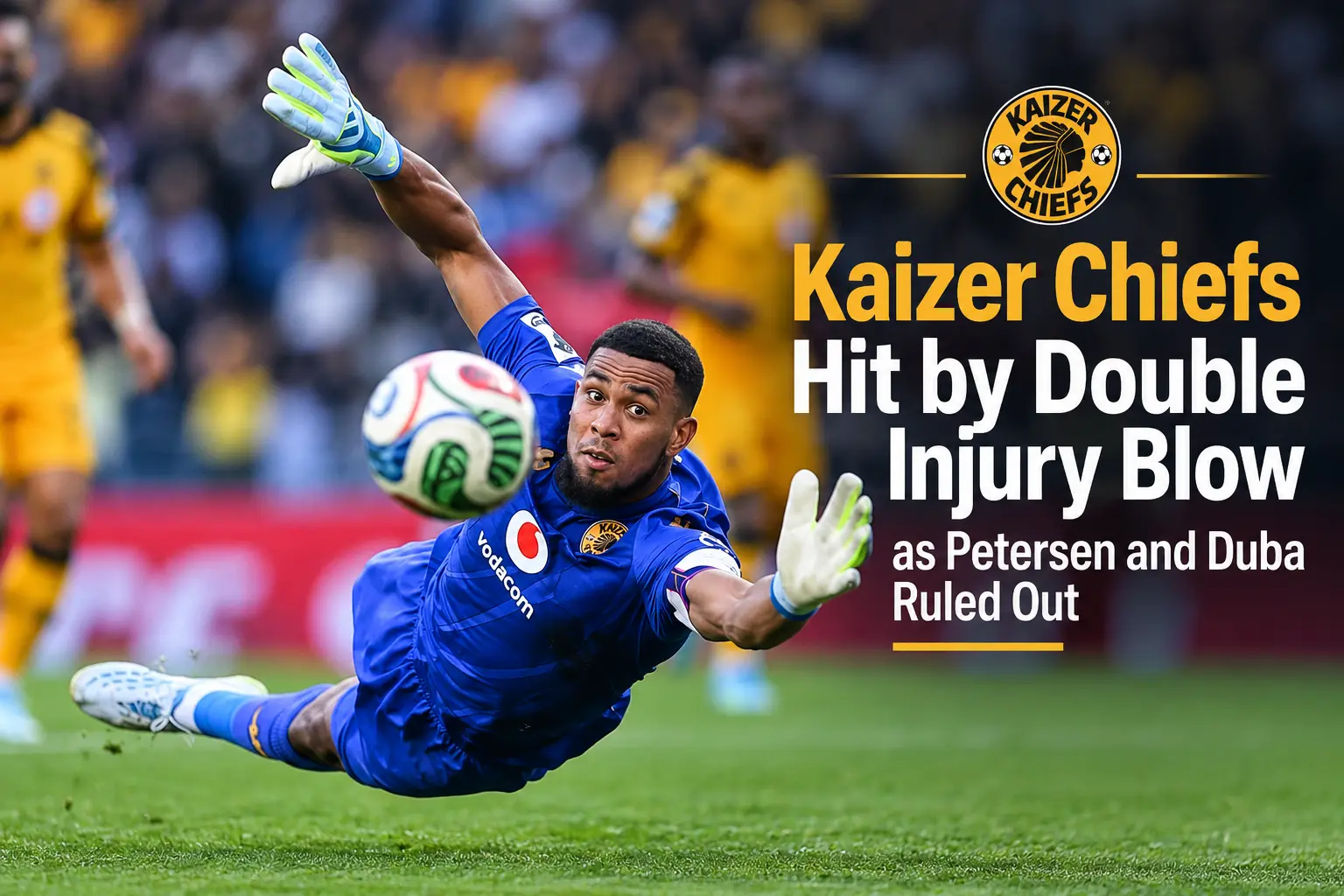
    Kaizer Chiefs go into the match against their last opponents before the FIFA international break this weekend with two key players missing due to injury, with goalkeeper Brandon Petersen and striker Wandile Duba both unfit to face their fixtures.

    The former has suffered a medial collateral ligament knee injury, with the side confirming that they are expecting a four- to six-week layoff as he rehabilitates from the strain sustained in training on a Tuesday morning.

    Meanwhile, the latter has been forced to the sidelines for approximately two weeks following a hip and groin condition — a small defect, the club noted — and with regular monitoring expected over the next week, there may be some delay in his return.

    Why injury blow hits Kaizer Chiefs

    Both players had been key performers in the early stages of the season, and their combined absence represents quite the obstacle to overcome for the Amakhosi, currently sat in the 2024/25 DStv Premiership table.

    Duba has already scored three times in the opening fixtures of the season, and with his attacking threat now limited, the management may be forced into a tactical reshuffle.

    As for Petersen, his involvement in every match since the start of the campaign suggests the side has been relying heavily on his performances between the posts. Now, with the goalkeeper out, it will be interesting to see what impact his absence will have on the match outcomes this season.

    What to expect from Kaizer Chiefs without key players

    The timing of the injuries is a mixed bag for the club, with the FIFA international break coming immediately after the weekend fixtures.

    This means that, at the very least, Duba’s two-week absence may not interfere with the player’s potential participation in the pause in the action and, therefore, the matches that follow.

    For Petersen, the longer expected recovery time means that he will miss more games, and with the club needing to have a goalkeeping option ready, it will be interesting to see who they turn to in his absence.

    The club has wished the two players a speedy recovery and is looking forward to their return.


    Source: Kaizer Chiefs injury update.

    Editorial policy: This injury news piece reflects the information given by the club on the situations of the players. The details on the nature of the injuries and the timelines for recovery have not been added to by the author with any unsubstantiated information.

    Corrections policy: At Sportskeeda, we believe in the accuracy of our reports. If you feel that there is any misinformation in this article, please let us know and we will correct it.

    Disclaimer: Injuries to players can be fluid, and recovery timelines should be taken as a reference rather than a definitive statement on the availability of a player for a specific match. Please check back closer to the matchday for any updates from the club.

  • Shea Lacey’s Dream Debut Goal Wasted as Brighton Dump Manchester United Out of the Carabao Cup

    Shea Lacey’s Dream Debut Goal Wasted as Brighton Dump Manchester United Out of the Carabao Cup

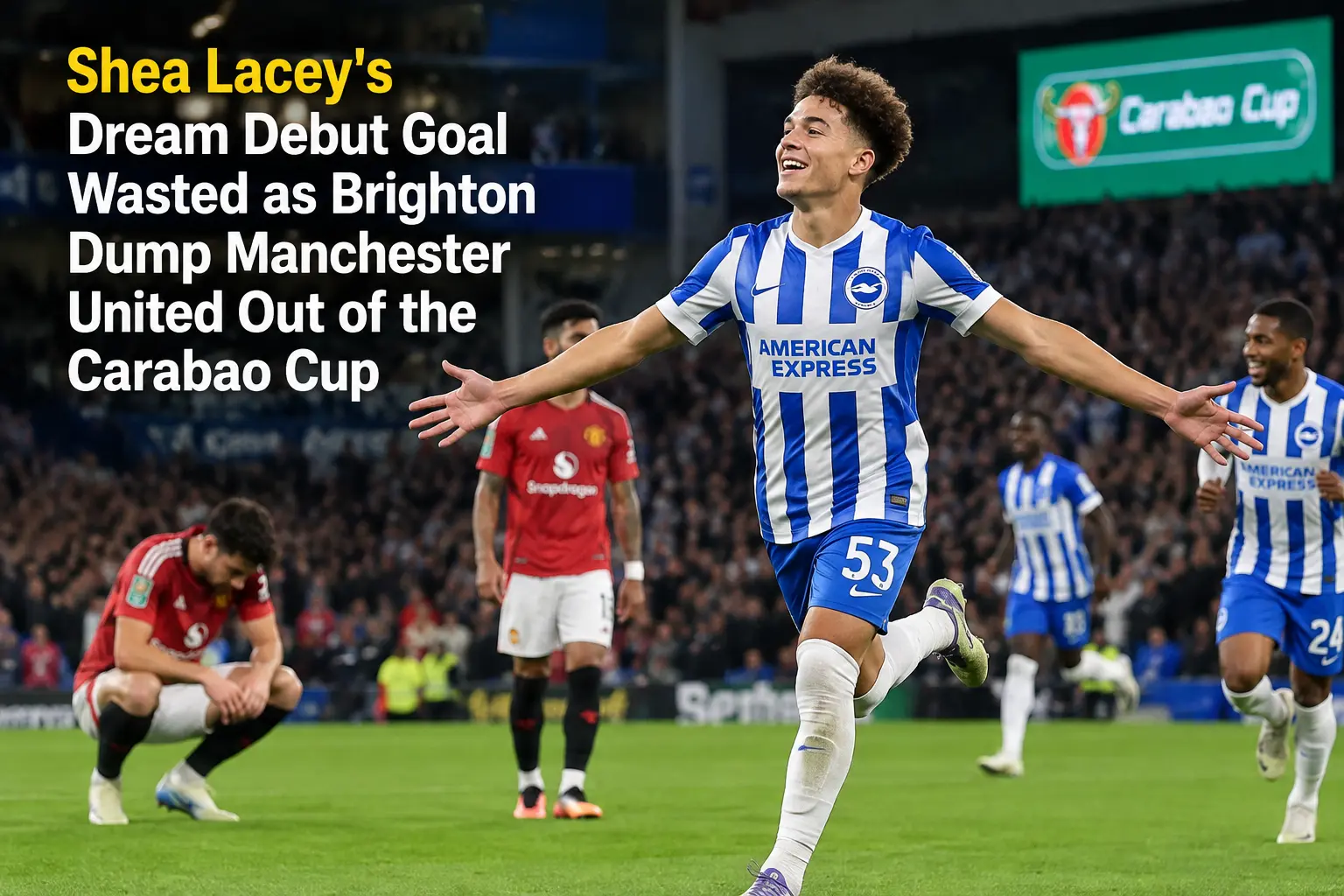
    Manchester United found a teenage star and lost a cup tie on the same night. Nineteen-year-old winger Shea Lacey marked his first senior start with a goal inside eight minutes, only to watch Brighton & Hove Albion recover from two down to win 2–3 and knock United out of the Carabao Cup third round on Wednesday evening.

    Lacey’s finish was the kind that gets a debut remembered. He drifted inside onto his left foot and lashed the ball home to open the scoring, and in doing so he joined some rare company. He became the first teenager to score on his first senior start for United since Marcus Rashford managed it back in 2016 — a decade-old marker that had stood untouched until now.

    For a while, it looked like being his night entirely. Mason Mount added a second and caretaker manager Michael Carrick’s side were 2–0 up within ten minutes, seemingly cruising. But that early comfort didn’t last.

    How the game turned

    United’s defensive frailties, which have dogged them for some time, resurfaced at the worst moment. Brighton clawed one back, then another, and eventually a third without reply, flipping a two-goal deficit into a win and sending United tumbling out of the competition.

    The result matters beyond the scoreline. A cup exit at this stage piles fresh pressure back onto a team that badly needed a clean, confidence-building night — and instead got a reminder of the problems that keep costing them.

    A debut worth measuring against Rashford’s

    The Rashford comparison is the story’s hook, but the two nights ended very differently, and that contrast is worth laying out plainly:

    DetailMarcus Rashford (Feb 2016)Shea Lacey (Sept 2026)
    Age at first start1819
    Opponent / competitionFC Midtjylland (Europa League)Brighton & Hove Albion (Carabao Cup)
    Goals scored2 (brace)1
    Match outcome5–1 win, United progressed2–3 loss, United eliminated

    Rashford’s debut came with a brace and a comfortable win that launched him toward the first team. Lacey has the goal and the headline, but not the happy ending — his moment was swallowed by a collapse he had no part in causing.

    What it means going forward

    For Lacey, this is the sort of introduction that earns a young player att

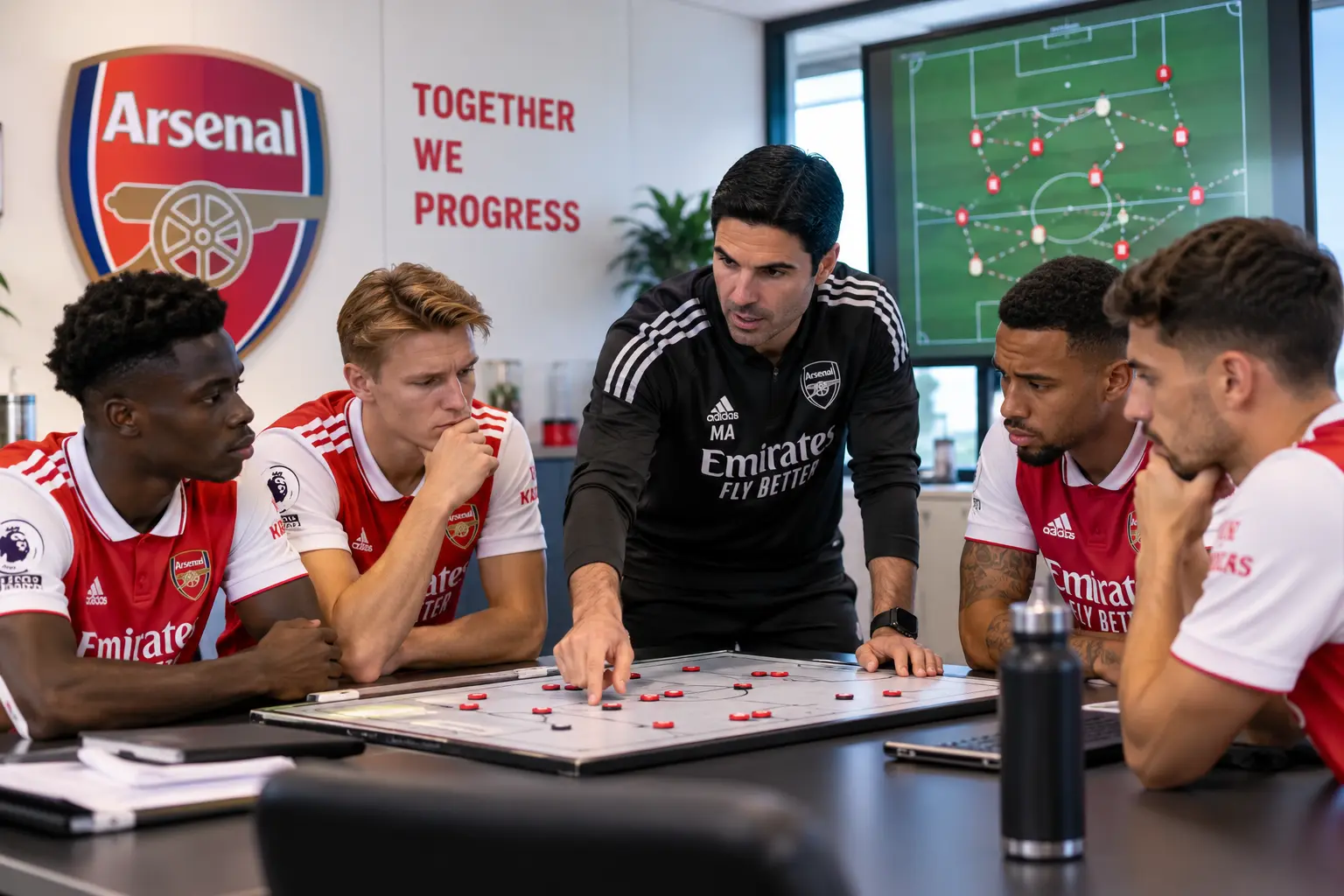
  • Can Arsenal be stopped this season? What do their early tactics tell us?

    Can Arsenal be stopped this season? What do their early tactics tell us?

    While it is a perfect start to the new season, three league games are far from sufficient in determining how good the new Arsenal will turn out to be.

    They have won all three league matches (scoring 6 goals and conceding only 1) as well as the Community Shield against Manchester City, giving them 4 wins from their first four competitive matches, with 9 goals scored and only 1 conceded.

    The stats aren’t lying.

    The more interesting thing to talk about, however, is why Arsenal have been so hard to beat.

    There are some clues as to why that is.

    They are very limited in what opportunities they are giving to the opposition to counter into.

    Their press is designed to stop passing options rather than chasing down their opponents.

    They have brought quality in their attack.

    But there are also questions.

    Can teams get through the press? What happens when Arsenal have to chase? And perhaps most importantly, will the recent change in referee rules concerning holding and blocking at set pieces impact their biggest weapon?

    We can’t answer those questions with only three games.

    We can, however, identify a few things to be on the look out for.

    Arsenal’s shape when they have the ball

    One of the first observations to make is what happens when Arsenal start building up from deep.

    Declan Rice frequently drops into the box, allowing the centre-backs to move out wider, providing an extra man in the first line of construction.

    It gives Arsenal a simple advantage.

    If the opposition send one forward to try and press, they have multiple options at the back, meaning they can switch the ball around the first line, rather than looking to beat the player with the ball right away.

    In front of that first line, Arsenal typically keep a player in the middle while the wide players and fullbacks operate in pairs.

    One player can be drawn in on the touch line while the other swings inside, and then those positions can be swapped.

    That creates a problem for defenders.

    If they follow the player coming inside, the space can be exploited outside.

    If they keep up with the wide player, Arsenal can find the player inside.

    Martin Ødegaard’s movements make this even harder.

    He will generally move into the side where Arsenal have the ball, presenting a further passing option in the area of the opponent’s block.

    That can create a numerical advantage for Arsenal around the ball.

    When the opposition move across to deal with that, the ball can be switched into the space on the other side.

    Why Arsenal are difficult to counter

    There is one other thing to note, which is easily overlooked.

    When Arsenal attack, they are not leaving six players behind the ball.

    They tend to keep six players behind the ball.

    It gives the protection should possession be lost.

    This is an important point since a good attacking structure is not necessarily just about attacking chances.

    If a team is going to lose the ball, it needs to have the players in positions to recover it.

    The position Arsenal adopt means there is typically little space for the opposition to work in.

    That means, even when Arsenal’s attack fails, they can be in a position to recover possession straight away.

    This is why their structure and their press are so interconnected.

    Arsenal don’t always press the player

    Another good thing to watch is their defensive work.

    Against Aston Villa, Arsenal’s forwards didn’t necessarily simply sprint towards whoever had the ball.

    They took up positions to deny passing options.

    By approaching the ball at an angle, a forward can deny a defender the chance to pass to another centre-back.

    A second player can also deny the route to the fullback.

    Meanwhile, the striker can set himself up in a way that makes it difficult for the holding midfielders to receive the ball facing goal.

    It means Arsenal don’t necessarily need to win the ball straight away, but they can make the next pass difficult.

    It is important to note that a team can appear to be not aggressively pressing because the man with the ball has time.

    But if three or four of his options have gone, the pressure is still working.

    Arsenal are often pressing the pass as well as the man.

    The new attacking question

    There has been an interesting change in Arsenal’s attacking options.

    Gabriel Martinelli’s departure has meant they have lost a player who threatened to get behind the defence and attack the space.

    But Christos Solis’ arrival provides a different attacking profile.

    Rather than staying wide, he is more comfortable coming inside, and working between the fullback and centre-back.

    It means the relationships around him change.

    A midfielder may come inside with him, opening up a different passing lane if the ball is played quickly forward.

    It isn’t about whether Solis is better or worse than the player he has replaced.

    He is different.

    And that can have an impact on the entire structure of an attack.

    It is far too soon to make judgements on the basis of the few games we have seen, but his positioning is worth watching as the season progresses.

    Arsenal’s biggest weapon may be the one teams cannot prepare for easily

    Set pieces have been crucial to Arsenal’s attacking success.

    Last season they scored 19 Premier League goals from corners (according to the numbers in the analysis) with the focus on movement, blocking and timing.

    The most recognisable feature of their corner routines is a group of Arsenal players getting close to the ball before suddenly spreading out in different directions.

    It means the defenders must make quick decisions about who they follow, who stays and who tracks their striker.

    That can open up space for Arsenal.

    Declan Rice has been involved in taking a number of their corners.

    The issue is that the rules and emphasis around set piece holding and blocking have changed.

    Premier League referees have been instructed to take a stricter approach to these situations and penalties will be given if the specified offences occur inside the penalty area.

    It could impact Arsenal more than most because set pieces have been so important to their attack.

    Once again, we can’t really make any definitive statements about that based on the few matches we have seen.

    That is something we’ll only be able to assess after a lot more games.

    There is another Arsenal question: the bench

    The strength of the Arsenal squad could become a factor.

    They have invested heavily this summer and added players who can change games from the bench.

    That gives the manager options that weren’t necessarily available to him last season.

    The entire nature of a match can change depending on the substitutions made in attack.

    A fresh winger can stretch a fatigued fullback, a midfielder can alter the tempo, and a player comfortable receiving between the lines can give Arsenal another option to get into the box.

    This is important because Arsenal haven’t really had to chase a game yet.

    They have been behind for only around 23 minutes of their matches, all at Chelsea.

    That is such a small sample size.

    We really haven’t seen what this version of Arsenal is like when the game plan isn’t working and they have to force the issue for an hour or so.

    There are already small weaknesses

    The clean sheet record looks fantastic, but Arsenal have given teams a couple of glimpses.

    Chelsea’s goal came early.

    A free kick was cleared but the ball dropped around the edge of the penalty area, where Arsenal’s midfield structure was high and narrow, leaving space.

    Chelsea were able to attack it.

    They also found themselves in a similar situation later in the match, with an effort hitting the post and forcing a save.

    Then there was Aston Villa.

    Despite the early goal, they managed to get behind Arsenal’s press with a long ball into a wide area.

    For a few seconds, Arsenal were exposed because the winger was wide and high while Saka had come forward to press.

    Villa briefly had a four-against-four situation.

    But Arsenal recovered quickly and they weren’t able to replicate it.

    That may be the key takeaway from those moments.

    The vulnerability is there, but the question is whether teams can exploit it.

    The unanswered questions

    We don’t know a number of things.

    William Saliba hasn’t played a minute this season, yet Arsenal have only conceded once.

    Rice and Lewis-Skelly have done a large portion of the midfield work, while one of the most important players they bought in the summer has yet to establish himself in the XI.

    And Arsenal have not had to chase a match for any length of time.

    That last point is particularly significant.

    A team can be very different when it has the lead and can play with time to think, compared to when it is 1-0 down in the 70th minute and the opposition decides just to sit and defend.

    We haven’t really seen that Arsenal yet.

    So, can Arsenal be stopped?

    Of course they can.

    Every team can, but the early signs suggest that it will require opponents to solve a number of issues simultaneously.

    They have to find a way to get around the press.

    They have to deal with the way Arsenal rotate in possession.

    They must prevent Arsenal from controlling the space behind the first press.

    And the need to defend set pieces without getting drawn all over the pitch.

    There are problems there as well.

    The space left behind an aggressive press can be exploited with accurate long balls, as Chelsea demonstrated.

    There can be space around the edge of the box, as Arsenal showed.

    And the new rules around set pieces could force them to modify some of their routines.

    But four competitive matches are far too small a sample to make any definitive statements.

    Arsenal have had a perfect start and so have Manchester City (who have also won their first three league matches), and right now City are above Arsenal on goal difference.

    The real test will come when teams have had more time to study these patterns, injuries change things, and Arsenal have to adapt to a difficult game.

    For now, the early signs are encouraging.

    Arsenal are not simply winning, they are forcing their opponents to work very hard to find a way in.
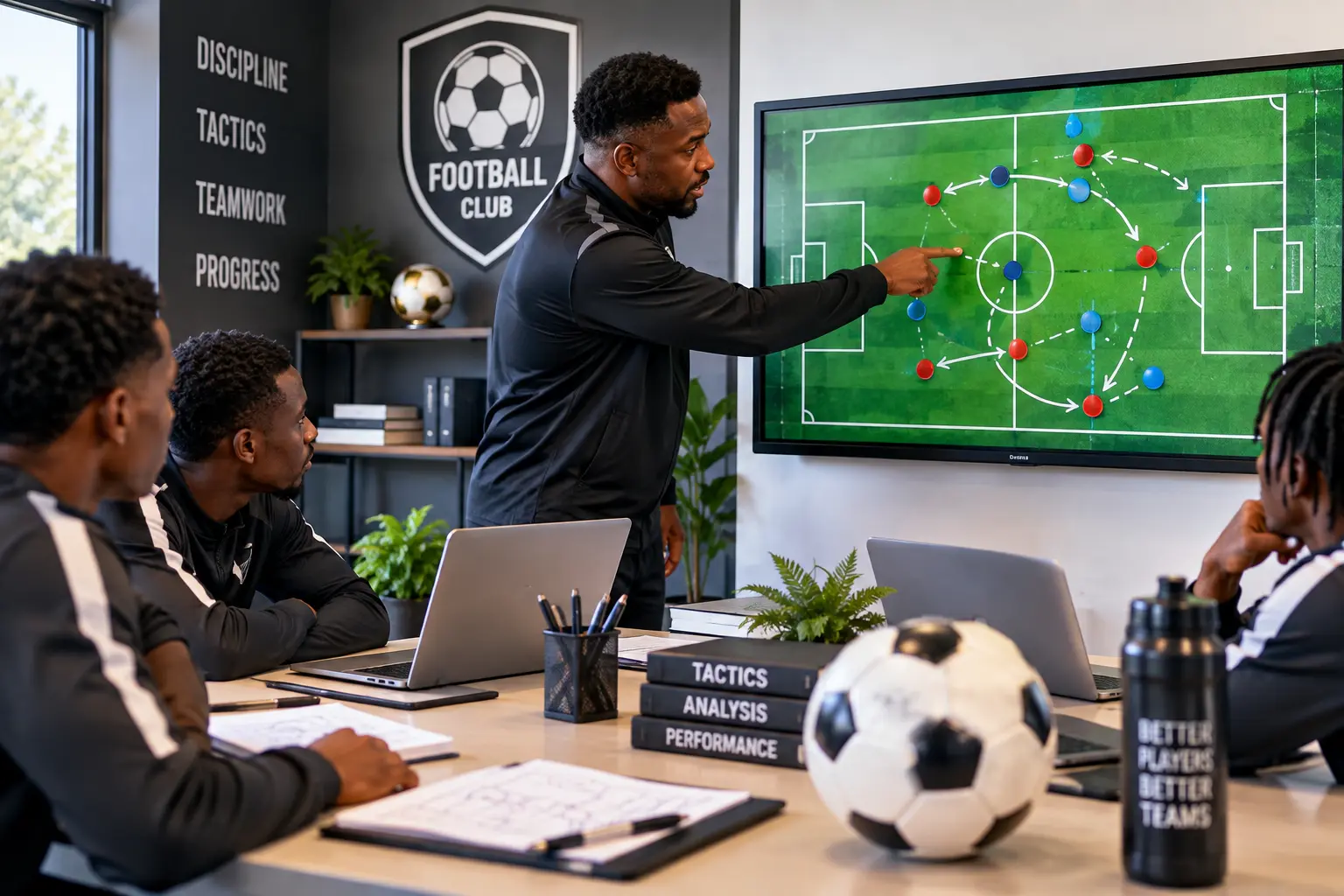
  • How to Analyse a Football Match: A Simple Guide to Understanding Tactics

    How to Analyse a Football Match: A Simple Guide to Understanding Tactics

    Watching football and analysing football are quite different things.

    When watching a match you might pick up on who scores, misses, has a good game etc. But a deeper look allows you to understand why a team is creating chances, why they are struggling to play out and what the players are doing without the ball.

    A good structure to break down a match can be split up into four main phases (in possession, out of possession, attacking transition and defensive transition) with set pieces studied separately as well.

    This first section focuses on what happens when the team has the ball.

    Start with the Build-up

    The first part to study during a match is the build-up, and what a team does when they have possession in their own half.

    Don’t focus too much on the formation they’ve written on the team sheet, but watch the positions they actually take up.

    Are the centre-backs spreading out? Is a midfielder dropping between them? Are the fullbacks playing deep or getting up? Is the goalkeeper coming out to be an additional passing option?

    All of these things can give you a good idea about what they intend on doing with the ball.

    Many teams will look to play short passes in the build-up, but not simply for the sake of it. They may be trying to draw the opposition closer to the ball in order to create space elsewhere.

    A typical example would be to be patient between their defenders and goalkeeper while the opposition’s forwards are sucked further up the pitch. This might create a midfielder to come in behind the press.

    That’s a good one to pick up.

    What is the team trying to do with the ball?

    Look at the Numbers

    One thing you will notice during the build-up is that teams like to create an extra man against the first press.

    If the opposition is sending one forward to press, they might use two players to build up around that press. If the opposition is sending two forwards to press, they might build up with a first line of three.

    This isn’t necessarily about having extra players. It’s about another passing option and being able to move the ball around and beyond the first wave of pressure.

    However, not every team is going to follow this exact pattern. The key thing is to watch what they’re actually doing rather than trying to fit it into a certain mould.

    Then Watch How the Ball Goes Through Midfield

    So now the team has got out of their press, the question is how they progress into the attacking third.

    This is where it’s worth looking out for any line breaking balls, and players moving out of position away from the ball.

    A midfielder coming in between the opposition’s midfield and defence, a winger coming inside to create an extra man centrally, a fullback stretching the defensive line forwards are all good signs of progression into the attacking third.

    Sometimes the ball goes through the middle, sometimes it goes around the outside, and sometimes a team simply plays over the midfield with a further pass.

    So when looking at a team, you might want to consider;

    • Do they like to go around?
    • Through?
    • Or over?

    There is no rule that says a team has to pick just one, and indeed most teams will vary based on how the opposition is defending.

    Pay Attention to Players Between the Lines

    One of the simplest ways to spot attacking intent is to watch for what happens in between the opposition’s midfield and defence.

    A player receiving there has the opportunity to turn and face the goal.

    But it’s what happened before he received the ball which can be interesting.

    Maybe a striker dropped towards the ball, dragging a centre-back forward.

    Perhaps a winger came inside, occupying a defender in the process.

    Perhaps a midfielder ran through the backline at just the right time.

    These movements can link up, and a player is not always moving just to receive the ball. Sometimes they’re doing it to create space for someone else. That’s a good habit to pick up when analysing football.

    Look for Rotations

    Players are not always in their starting positions.

    A winger may drift into the middle while his fullback runs outside him. A midfielder may move towards the wing, with another midfielder moving into the central position.

    These rotations can cause confusion for defenders.

    When you see this happening, you don’t want to simply describe it. Try to explain why it happened.

    Was it to create a 2v1? To pull someone out? Open up a passing lane? Was someone trying to attack the space behind the defence?

    The answer to these questions is key in understanding the team’s tactic.

    The Final Third is Where the Plan is Revealed

    Once the ball has got into the attacking third, watch how the team tries to create their final chance.

    Some teams like to combine short passes around the box, others attack quickly from the flanks and throw crosses into the box. You might see a fullback constantly overlapping a winger, and another team will like to keep their fullbacks deeper, asking the wingers to attack the space inside instead.

    There are a lot of things you can look for.

    Look out for repetitions of these things. Does the winger keep cutting inside? Does the fullback always overlap? Does the midfielder always arrive late at the edge of the box? Does the striker always move towards the post? Do these attackers always look for cutbacks instead of high crosses? This one thing might not tell you much, but if you see the same thing occur several times during a match it will almost certainly be part of the plan.

    Don’t Forget the Players Themselves

    A team’s tactics are also affected by the qualities of the players involved.

    A fast winger can force a fullback into moving into a new position, a striker comfortable dropping deep can cause problems for centre-backs and a midfielder with great passing range can allow the team to attack from further up the pitch.

    That is why two teams with similar formations can look totally different.

    The formation gives you the starting point, but what the players are doing and their qualities inform what the team is actually trying to do.

    A Simple Way to Watch a Match

    If you are new to analysis and don’t want to take on too much initially, pick one team and watch its possession.

    First, observe their shape when the goalkeeper or centre-backs have the ball, then how the midfielders are positioned. Next, look at how the team gets into the final third. Finally, see what the attackers do once they have the ball. After a few attacks, you should start seeing patterns.

    You might notice that the right fullback always moves forward when the right winger cuts inside. Or the striker always drops deep to open a space for a midfielder. These repeated actions are the ones you want to pick up on.

    The Biggest Mistake: Watching Only the Ball

    This is probably the hardest habit to break.

    When the ball is with the centre-back, it’s natural to watch it. But some of the most interesting things happen elsewhere.

    Watch the midfielder.

    Look at the winger.

    What is the striker doing?

    Is a defender getting pulled out of position?

    Sometimes the pass that breaks a defensive line is only possible because of an action that happened several seconds ago, and away from the ball.

    What Should You Write Down?

    By the end of the possession phase you should be able to answer a few basic questions.

    Build-up: How are they structuring themselves to deal with pressure?

    Progression: How do they get through the midfield and into the attacking third?

    Final third: How do they create chances?

    Player movements: Which movements do they repeat?

    Individual qualities: Which players are affecting their attacking approach?

    You don’t need complicated terminology to produce good analysis.

    If you can explain what happened, why it happened and whether the team repeated it, you’re already moving beyond simply watching the game.

    The next step is to analyse what happens when the same team doesn’t have the ball. That is when you start to look at pressing, the defensive shape, tracking runners, and how a team tries to stop their opponent progressing.

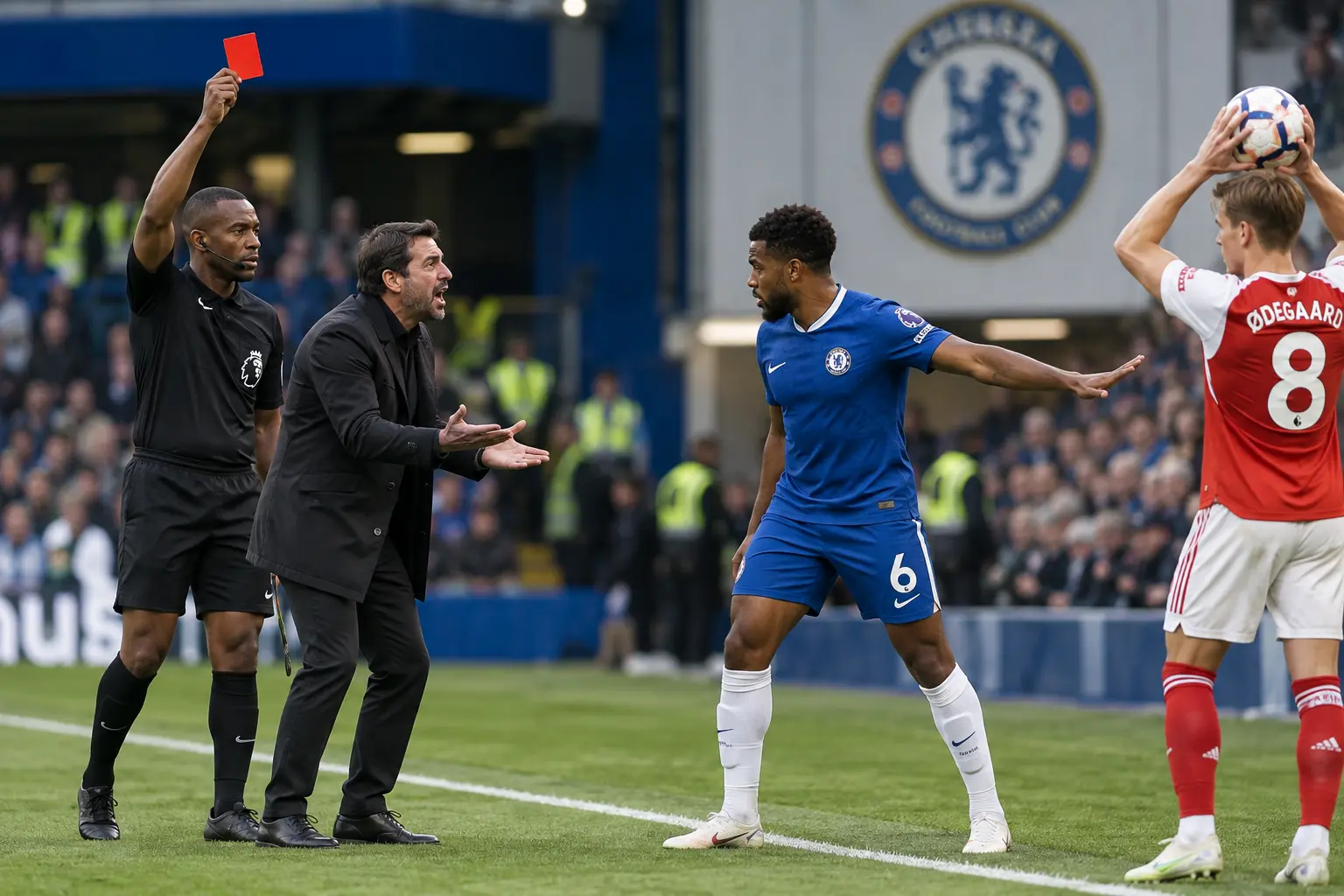
  • Defender Penalised After Blocking Throw-In as Manager Sees Red Card

    Defender Penalised After Blocking Throw-In as Manager Sees Red Card

    An unusual incident occurred on a referee where a defender was warned for getting too close to the touchline and then deliberately blocked a throw-in after.

    The incident began with a throw-in; as the defender headed towards the touchline the referee advised him to retreat. When the throw-in was eventually taken the defender headed towards the touchline once more and blocked the ball.

    The referee stopped the action and issued the defender with a yellow card.

    The situation became even more unusual when the manager appeared to express disagreement with the assistant referee and left the technical area. According to the Laws of the Game, to exit the technical area in order to express disapproval of a match official can be considered a send-off offence.

    Why was the defender given a penalty?

    The most important aspect of the incident is the code of rules pertaining to throw-ins.

    When a player is defending a throw-in they must not unfairly distract or obstruct the player taking it; this involves moving to within two metres of the spot on the touchline at which the throw-in is being taken.

    The defender had already been instructed by the referee to move away from the touchline; but when the throw was taken he returned towards the ball and interfered with it.

    The ball was in play when the defender blocked it since the throw-in had already occurred.

    That distinction is crucial.

    Why was the free kick given indirectly?

    After the ball has been returned to play from the throw-in, the offensive team are not dealt with by simply retaking the throw.

    The referee has the authority to penalise the player should he or she unfairly distract or obstruct the thrower.

    The restart in this case is an indirect free kick to be taken from the spot where the defender touched the ball, provided that the normal requirements of the Laws of the Game are satisfied.

    If the player had committed the offence before the throw-in had been taken, the referee would have halted the restart, given her a warning and asked that the throw-in be retaken.

    What makes the incident so interesting is the difference between the state before the ball begins play and after.

    What concerning the manager’s red card?

    The manager’s reaction led to another disciplinary matter.

    When the defender was cautions the manager left the technical area and obviously expressed his disapproval of the assistant referee.

    Team officials may leave the technical area in some cases, but if they intentionally do so in order to confront or show dissent towards a match official a red card will follow.

    The referee therefore had two separate incidents to deal with:

    The act of the defender obstructing the throw-in.

    The manner in which the manager treated the match official.

    Was the referee’s decision the right one?

    The referee’s decisions are in line with the relevant Laws of the Game in the light of the sequence described.

    The defender had been told to move away from the touchline but instead headed back towards the throw-in and got in the way of the ball after it had entered play.

    It means that a restart is now given as an indirect free kick rather than a retaken throw-in.

    The manager’s behaviour is also a separate disciplinary issue, and deliberately exiting the technical area with the intention of showing disapproval of an official is enough for a direct red card.

    What at first seems to be an ordinary throw-in actually becomes a complex sequence comprising player positioning, interference with a restart, disciplinary action and technical-area misconduct.

    Editorial Note

    The explanation is based on the incident and the way it has been interpreted in the source material, and finally it is up to the match officials what refereeing decisions are made, taking into account the player’s actions, the timing and the intent.

    Source

    Source: The information regarding the match incident and the refereeing has been provided for publication.

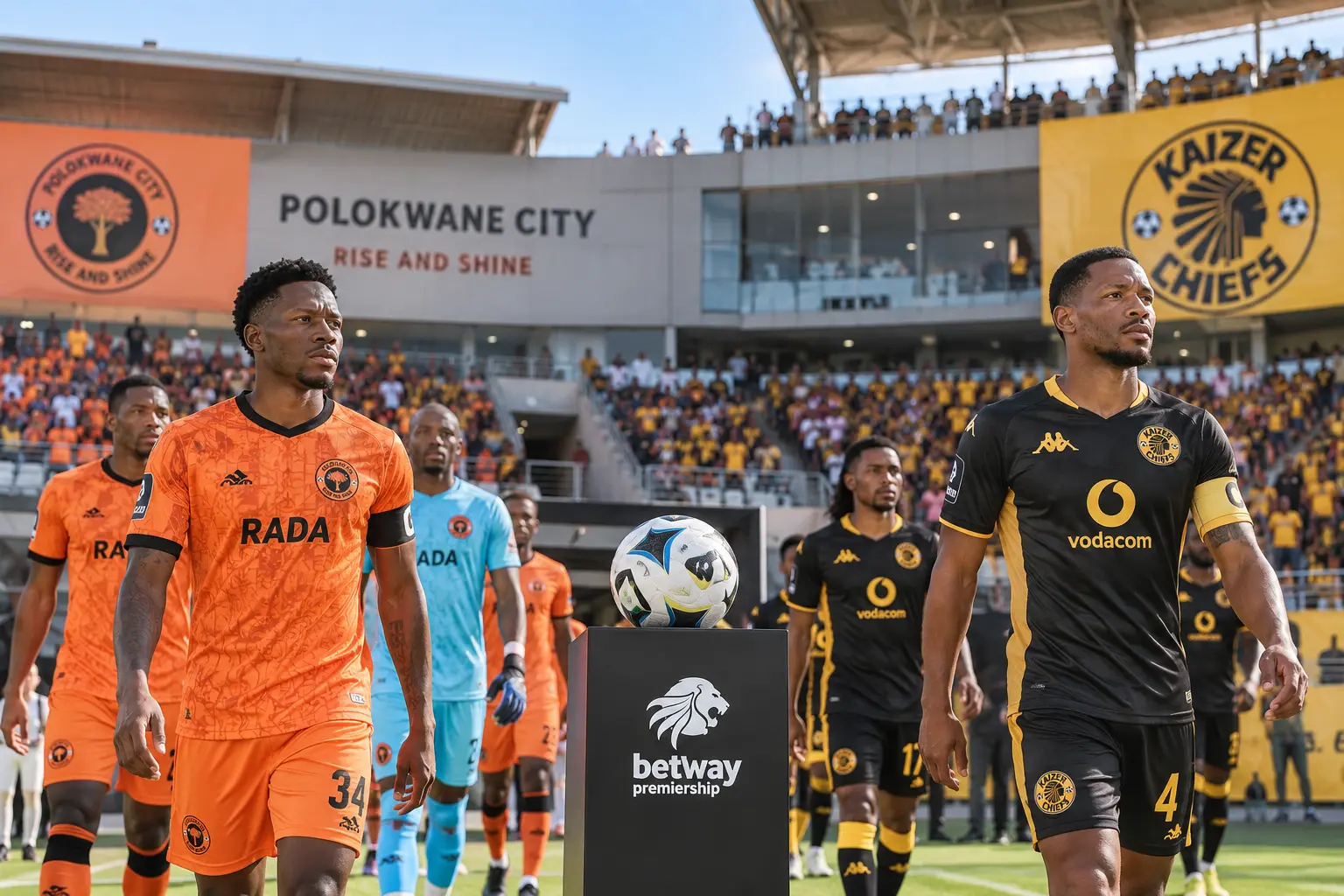
  • Polokwane City Take on Kaizer Chiefs in Important Premiership Match Today

    Polokwane City Take on Kaizer Chiefs in Important Premiership Match Today

    Kaizer Chiefs return to Betway Premiership action this afternoon when they travel to Polokwane to face Polokwane City at the Old Peter Mokaba Stadium.

    The match gets underway at 15:00 on Saturday, 12 September 2026, with Chiefs hoping to build on their recent victory while City look to turn their home advantage into three points.

    Chiefs have made a strong start to the campaign and currently sit third on 11 points after five matches. Their last league game produced a 3–2 win over Siwelele.

    Polokwane City are further down the table in 10th place with six points. They were held to a 2–2 draw by Marumo Gallants in their previous match.

    That leaves both teams with plenty to play for this afternoon.

    Chiefs arrive with confidence

    The 3–2 win against Siwelele was an important result for Chiefs. They will now want to avoid dropping points against City and keep themselves within touching distance of the teams at the top of the table.

    An away match in Polokwane will not be straightforward, though. City will be playing in front of their home supporters and will be determined to make the occasion count.

    City looking to move up the table

    Polokwane City’s position does not tell the whole story of their recent performances.

    The team earned a point in their last match against Marumo Gallants and will see today’s fixture as an opportunity to make a bigger statement.

    Beating Chiefs would give City a major boost and could help them move up the standings, depending on other results.

    Match information

    Polokwane City vs Kaizer Chiefs
    Competition: Betway Premiership
    Date: Saturday, 12 September 2026
    Kick-off: 15:00
    Venue: Old Peter Mokaba Stadium, Polokwane
    Ticket price: R60, according to the supplied match information

    The match is listed for broadcast on SuperSport PSL Channel 202, with streaming also available through DStv Stream for eligible subscribers.

    The teams

    The supplied match information lists the following players:

    Polokwane City: Masuluke, Manthosi, Modise, Nkaki, Ramaja, Kambala, Maphangule, Matube, Sebone, Dlamini and Molokwane.

    Kaizer Chiefs: Petersen, Frosler, Cross, Miguel, Moloisane, Maboe, Ndlovu, Mthethwa, Mmodi, Vilakazi and Ighodaro.

    These should not be treated as final team sheets until the clubs officially announce their starting XIs.

    What is at stake?

    For Chiefs, the target is straightforward: keep winning and stay among the leading sides.

    For City, the opportunity is just as important. A win over Chiefs would give the club three valuable points and provide a lift after their draw with Gallants.

    The two teams therefore arrive with different league positions but a similar need for a positive result.

    For supporters heading to the stadium, the 15:00 kick-off means the action starts in the afternoon, with the Old Peter Mokaba Stadium set to host one of Saturday’s notable Premiership fixtures.

    Source: Match information and fixture details supplied for the Polokwane City vs Kaizer Chiefs fixture.

    Editorial note: This article was rewritten independently to provide clear match context and useful information for readers. Details that can change before kick-off, including starting line-ups and broadcast arrangements, should be checked against official matchday announcements.

    Corrections: If a factual error is identified, it will be reviewed and corrected where necessary.

    Disclaimer: Ticket availability, team selections and broadcast arrangements may change. Fans should confirm the latest information before travelling to the stadium.

  • Rulani Mokwena wins first five Pyramids FC matches, keeping clean sheets

    Rulani Mokwena wins first five Pyramids FC matches, keeping clean sheets

    Rulani Mokwena has started his coaching career at Pyramids football club in a spectacular manner, registering five wins in his first five official matches, with his team not conceding a single goal.

    The South African tactician’s latest triumph came on 9 September 2026, as his side Pyramids drew a 1-0 victory over El Gouna in the Egyptian Premier League.

    The win marks an incredible start to Mokwena’s coaching journey as the five-time winner has registered nine goals and five clean sheets since his appointment.

    Four wins came in the Egyptian Premier League, while Mokwena registered a 2-0 away victory in the CAF Champions League against Gor Mahia.

    Rulani Mokwena’s first five matches

    Date CompetitionFixture Result 22 August 2026Egyptian Premier LeagueGhazl El Mahalla vs Pyramids 0–3 27 August 2026Egyptian Premier LeaguePyramids vs Abo Qair Semads 2–0 31 August 2026Egyptian Premier LeagueAl-Masry vs Pyramids 0–1 6 September 2026CAF Champions LeagueGor Mahia vs Pyramids 0–2 9 September 2026Egyptian Premier LeaguePyramids vs El Gouna 1–0

    This incredible record has seen Pyramids register:

    Five matches — 5 wins — 0 draws — 0 losses Goals scored: 9 Goals conceded: 0 Clean sheets: 5

    Not conceding a goal, one of the best starts

    Perhaps one of the best achievements of Rulani Mokwena’s first five matches as Pyramids manager is that his team has not conceded a single goal.

    The Egyptian side registered three tight victories, with their latest win coming in a 1-0 victory against El Gouna, while they also registered two 2-0 victories, one of which came in the CAF Champions League against Gor Mahia.

    The 3-0 win against Ghazl El Mahalla turned out to be the best start for Pyramids and Mokwena, who registered their first-ever win in the Egyptian Premier League.

    Given that Mokwena had just registered five matches since his appointment as the head coach of Pyramids, the South African tactician has done something incredible, as his side has kept a clean sheet in every match.

    It is still early to tell if the same performances will be registered by Pyramids in the coming months, but it is safe to assume that the club has found a defensive system that has allowed them to register five consecutive clean sheets in their opening five matches.

    The win against Gor Mahia comes with continental significance

    The victory over Gor Mahia in the CAF Champions League comes with continental significance for both teams, given that Pyramids will host the second leg of the tie after registering a 2-0 win in Kenya.

    Mokwena’s men scored twice in the first half to register their second victory in the CAF Champions League.

    While the victory may not be the most significant for Mokwena, who registered a hat-trick against his former club Al Ahly last season, the result demonstrates that the positive form registered by Pyramids domestically can be showcased continentally.

    The start is relatively slow in terms of scoring

    Nine goals scored by Pyramids in their opening five matches under Mokwena’s management is the equivalent of less than two goals per match.

    In fact, the impressive statistic helps provide context to the incredible defensive record registered by the club.

    Pyramids did not need to score three or four goals per match to register five consecutive victories, as the team has registered one 3-0, two 2-0, and two 1-0 victories.

    Another way to put it is that every win registered by Pyramids came with a clean sheet.

    Why Rulani Mokwena’s start in Egypt matters

    Rulani Mokwena’s impressive start in Egypt will certainly capture the attention of many football fans in South Africa, where the 41-year-old tactician has built his coaching career.

    Mokwena registered his first managerial job in South Africa before embarking on a journey that took him to various leagues in Africa.

    Therefore, the South African coach can be considered to be in the best position to achieve success at Pyramids, as he is familiar with the calibre of competition in Africa.

    Pyramids are chasing domestic glory while also trying to make an impact in the CAF Champions League, which makes Mokwena’s exploits even more fascinating for South African fans.

    It is important to note that the coming months will be even more interesting than the first five matches.

    The reason is quite simple, as Pyramids will need to showcase similar levels of consistency to progress further in the CAF Champions League and the Egyptian Premier League.

    The next test for Rulani Mokwena’s side is crucial

    The promising start registered by Pyramids under Mokwena’s management needs to be followed by equally convincing performances across the board.

    The CAF Champions League will see the Pharaohs play two-legged ties against their opponents, while the Egyptian Premier League will test the ability of Pyramids to register consistent results over a prolonged period.

    The first significant test for Mokwena and his men will come in the CAF Champions League, as they will host Gor Mahia in the second leg, with the Kenyan side likely to come out stronger after registering a 2-0 win in Nairobi.

    The South African tactician will need to ensure that his men do not lose their impressive run, which has seen them register five consecutive clean sheets in the opening five matches of the season.

    The numbers tell it all about Mokwena’s start

    Five wins, no draws, no losses, nine goals scored, zero goals conceded and five consecutive clean sheets.

    Such statistics are not common in football, especially when a manager registers five wins in five matches, with the team scoring nine goals and conceding none.

    Perhaps the most fascinating part of Mokwena’s impressive start is that Pyramids registered two 2-0 victories, one 3-0 win and two 1-0 victories.

    In other words, every win came with a clean sheet.

    While these numbers cannot guarantee that Mokwena will register similar achievements for the rest of the season, they demonstrate that the South African tactician has made a sensational start in Egypt.

    For South African football fans, it will be interesting to follow Mokwena’s journey as one of the country’s coaches tries to make an impact in one of the most competitive leagues in Africa.

    Source

    Source: Match results and competitions provided for Rulani Mokwena’s first five matches as the head coach of Pyramids.

    Editorial policy

    This article was written independently using the data provided. The aim is to offer South African readers unique sports news and not to reproduce the content presented on the source webpage providing the data.

    Statistics and match results are presented as received and should not be used to make unsubstantiated claims about future results.

    Corrections policy

    We reserve the right to make corrections if errors are found by cross-verifying the published content with reliable match or competition data.

    Disclaimer

    Football match results, fixtures and competitions are subject to change. This article is based on the five-match data provided and should not be used to infer future performance by Pyramids FC.

    Mokwena has started his tenure with five wins and five clean sheets, but the bigger challenge will be to register consistent results as the Egyptian league and CAF Champions League campaigns intensify.

  • Golden Arrows vs Kaizer Chiefs Fixtures Reportedly Moved to Mbombela

    Golden Arrows vs Kaizer Chiefs Fixtures Reportedly Moved to Mbombela

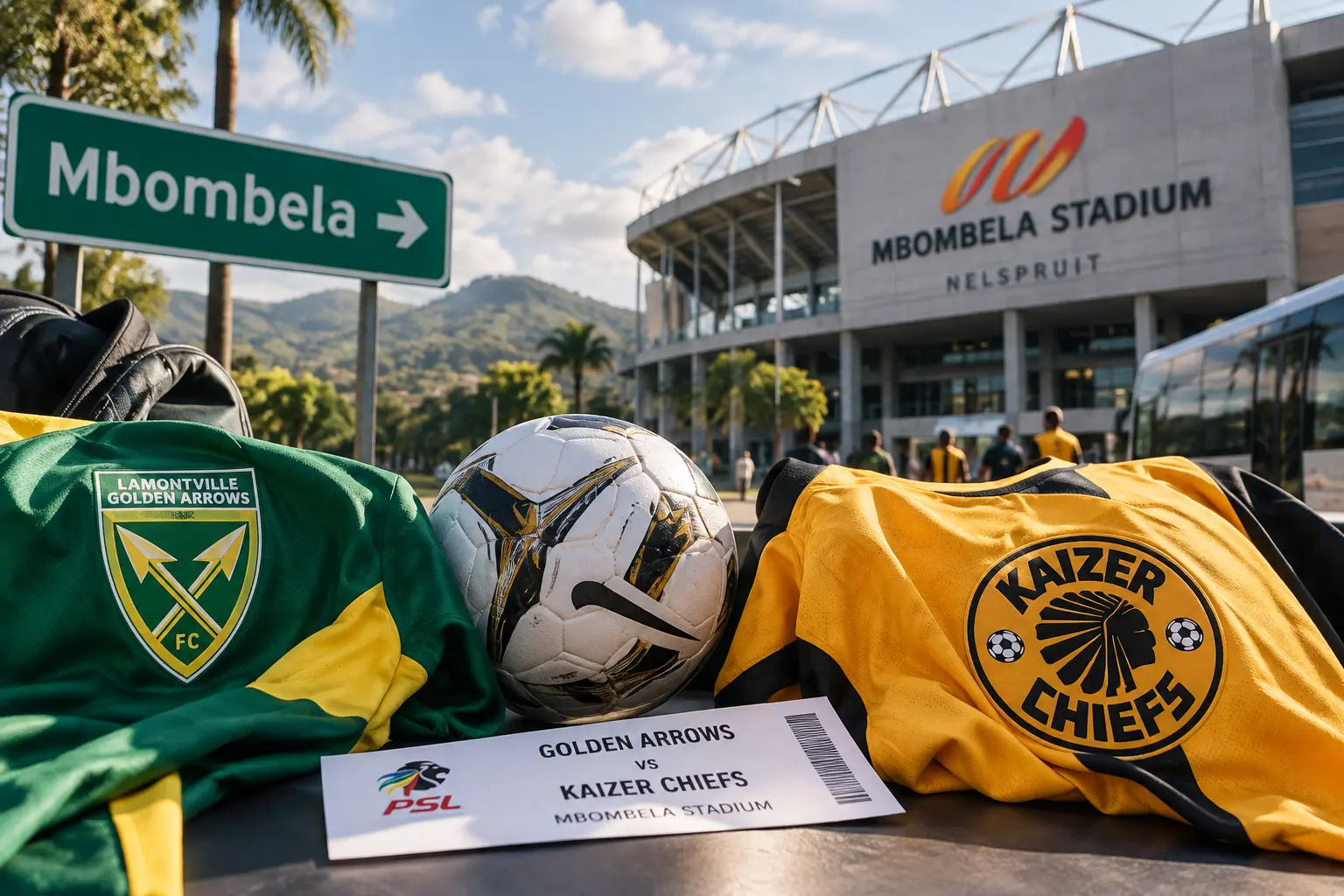
    The upcoming fixtures between Golden Arrows and Kaizer Chiefs were reportedly moved from King Goodwill Zwelithini Stadium in Durban to Mbombela. The match is scheduled to take place on 20 September 2026 at 15:00.

    Golden Arrows vs Kaizer Chiefs

    Date: 20 September 2026

    Venue: Mbombela Stadium

    Kick-off time: 15:00

    The fixture change makes it clear that the much-anticipated Betway Premiership clash will not be taking place in Durban.

    The location of the fixture is of particular importance to supporters who make the long trip to watch the teams play.

    However, fans must confirm the updated fixture details from either the Premier Soccer League or the clubs before heading to Mbombela because the two official websites do not appear to have the same information. According to the PSL fixture list, the match is still scheduled to take place at King Goodwill Zwelithini Stadium. On the other hand, the Mbombela Stadium website shows Golden Arrows vs Kaizer Chiefs on 20 September 2026 at 15:00.

    Why supporters need to be careful

    If accurate, the fixture change will cause logistical challenges to fans who make the long trip from Durban and other parts of KwaZulu Natal to watch the game.

    For now, supporters are advised to check back with the PSL or the clubs before booking any flights or other transport because the information on the PSL’s website and Mbombela’s does not match.

    Reference

    Fixture information retrieved from

    Premier Soccer League, Golden Arrows, Kaizer Chiefs and Mbombela Stadium.

  • Messi Enters New Chapter After Argentina Retirement as Ballon d’Or Nomination and Eldense Deal Emerge

    Lionel Messi has already prepared for life after Argentina as the footballer continues in Inter Miami, earns Ballon d’Or nomination, and signs a deal to buy the Spanish second-division club Eldense as a majority shareholder.

    Messi announced his decision to retire from international football on 31 August 2026, bringing an end to his spectacular Argentina career.

    39-year-old Messi leaves the pitch as the country’s appearing-maker and second-highest goalscorer with 207 caps and 125 goals.

    He departs with a World Cup win and two-time Copa America champion.

    However, Messi’s Argentina career is not the end for the footballer.

    Messi nominated for the 2026 Ballon d’Or

    One of the latest news regarding Messi came only a few days after the Argentina forward announced his international retirement.

    France Football added Messi to the shortlist of the 30 nominees for the Ballon d’Or 2026, after the footballer enjoyed a remarkable season for Inter Miami and Argentina in 2025-26.

    Messi won the 2025 MLS Cup and was named the league’s MVP for the second consecutive season.

    In addition, Messi led Argentina to the 2026 World Cup final, where they met Spain.

    The 2026 Ballon d’Or will be presented on 26 October 2026 at the London Palladium Theatre.

    Messi has won the prestigious individual award a record eight times, most recently in 2023.

    His Argentina career is officially over

    Messi’s Argentina career is officially over after more than two decades.

    The iconic forward made his debut for Albiceleste in 2005 and became the focal point of the national team, leading them to record-breaking success in recent years.

    His achievements in the international arena include:

    2021 Copa America

    2022 FIFA World Cup

    2024 Copa America

    In addition, he wrote history of sorts by reaching the 2026 World Cup final, which they lost on penalties to Spain.

    The Argentine Football Association will host various matches where the players will mark a minute’s silence in tribute to Messi and his iconic number 10.

    Messi continues to shine for Inter Miami

    As Messi’s international career came to an end, he continues to dazzle in MLS.

    In Inter Miami’s first match since Messi’s international retirement, he recorded an assist in a 2-2 draw at Atlanta United on 5 September.

    In the previous encounter, Messi scored four goals and recorded an assist in a 7-1 win over CF Montreal.

    Messi has been one of the best scorers in MLS, finishing the league season with 18 goals, which puts him in the second half of the regular season.

    It is also interesting to note that Messi has surpassed many of his international achievements by playing for Inter Miami, keeping in mind that they won the 2026 World Cup.

    Lionel Messi has officially retired from international football, but his career on the pitch continues.

    Next match against Chicago Fire

    Inter Miami meets Chicago Fire in another MLS encounter on the road this Wednesday, 9 th of September, at Soldier Field.

    The match kicks off at 8:30 p.m. ET.

    Messi will aim to continue his recent stellar form in MLS after drawing with Atlanta United.

    Inter Miami has already confirmed that this match will kick off this week, following the weekend game.

    Messi signs deal to buy a majority stake in Eldense

    The last piece of news regarding Messi comes from Spain, where he has reportedly signed a deal to buy a majority stake in second-division club CD Eldense.

    According to EFE, Messi struck a preliminary deal to become the majority shareholder of the club, citing sources close to the player.

    Meanwhile, Spanish reports suggest that Messi will buy all of Eldense’s shares, however, the deal is far from over.

    Both parties need to sort out the terms and conditions, and due diligence before the transaction can be completed, including the approval of Spain’s sports authority, Consejo Superior de Deportes (CSD).

    Since the deal is yet to be finalized, it is more accurate to say that Messi has reached an agreement to buy Eldense rather than confirming that the transfer of ownership has happened.

    From a footballer to a football club owner

    A completed deal will see Messi join an exclusive group of footballers who have bought football clubs.

    Previously, Messi bought Unió Esportiva Cornellà, a Spanish third-division club, earlier this year.

    It is worth noting that Eldense, a second-division side, is a notch higher in terms of stature and profile.

    In addition, Messi will join a growing list of footballers who have bought football clubs while still playing for their respective teams in the top leagues.

    What about Messi’s contract with Inter Miami?

    Messi’s career on the pitch continues with Inter Miami, where he signed a significant contract, which will keep him with the club until 2028.

    There have also been reports that Messi’s contract with Inter Miami contains a release clause.

    However, these reports should be taken with a pinch of salt, as neither Inter Miami nor Messi’s representatives have officially confirmed the existence of such a clause.

    It goes without saying that Messi’s Argentina retirement does not necessarily mean an end to his career on the pitch.

    A new chapter for Messi

    Lionel Messi has entered a new chapter in his football career, which has already seen him achieve many things.

    While his international career seems to be over, Messi continues to dominate in MLS, chasing another Ballon d’Or, as well as buying football clubs.

    For Argentina, the biggest challenge ahead is replacing the legendary Messi, who was representing the Albiceleste for more than two decades.

    At the same time, Inter Miami looks to continue their quest for the MLS trophy.

    Finally, if the reported deal goes through, Messi will also be able to add another chapter to his football career as a professional football club owner.

    The Messi’s international chapter has come to an end, while the football story continues to gather new dimensions.

    Source and reporting note

    This article is based on independent news reports from Reuters, EFE, Major League Soccer, Inter Miami CF and Spanish reporting.

    The transaction with Eldense is referred to as a preliminary agreement, because the purchase is subject to legal, contractual and regulatory processes.

    Editorial policy

    We make a distinction between reported developments, speculation and confirmed information.

    We treat contractual details that have not been officially disclosed as such.

    Disclaimer

    Football transfers, ownership transactions, contracts, fixtures and player decisions can change.

    The Eldense transaction is subject to the completion of procedures and appropriate approvals, and readers are advised to consult official statements from the relevant clubs and leagues for confirmation.

  • Boitumelo Radiopane Pushes for Bafana Bafana Call-Up After Fast Start to Premiership Season

    Boitumelo Radiopane Pushes for Bafana Bafana Call-Up After Fast Start to Premiership Season

    The 24-year-old Sebokeng-born forward has been key to the Pirates’ unbeaten start to the 2026-27 South African Premiership campaign, scoring twice plus an assist.

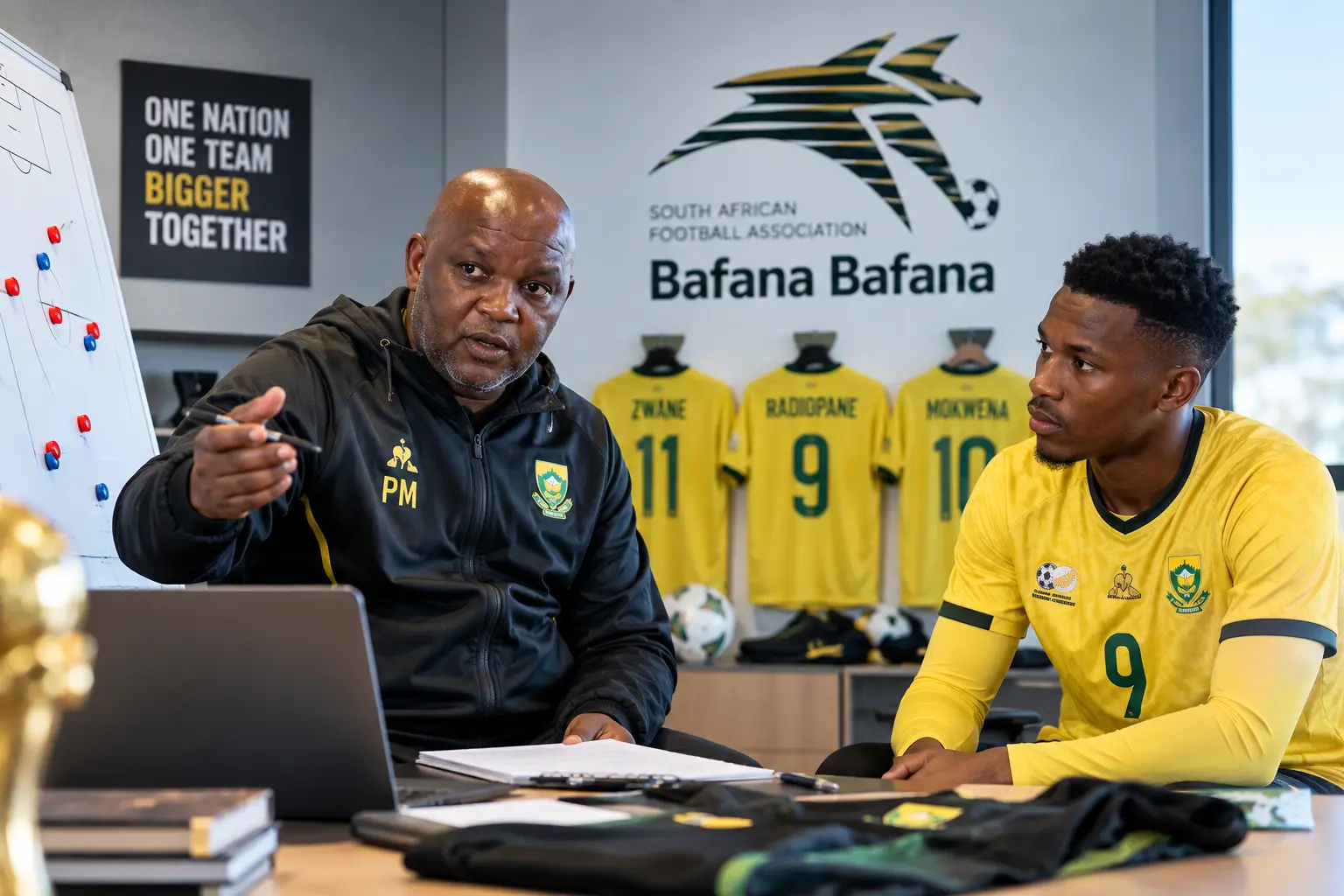
    Radiopane has put himself centre- stage at a time when Mosimane has joined the Bafana Bafana setup

    The new coach and a need for goal scorers

    Radiopane’s current season haul took a starring role in Orlando Pirates’ 4-0 win over Kruger United.

    The forward’s output highlights the importance of his campaign as the new season gets underway.

    There can be little doubt that a strong opening campaign is vital to a striker pushing to earn international recognition.

    The initial group of internationals is well-established, but the way Radiopane has started suggests that space does exist for players to fight to break into the Bafana Bafana squad.

    This timing could work for the attacker

    Radiapane’s timing is perfect in more ways than one.

    The national squad is gearing up for what could be a busy year in the 2027 Africa Cup of Nations qualifiers.

    Matches against Guinea and Eritrea are coming up later this month.

    The pressure is mounting on coaches as injuries strike some of the senior Bafana Bafana attackers.

    It is unlikely that Radiopane will get a national-team call-up immediately, but he has demonstrated the kind of consistency that makes players take notice.

    No national-team call-up yet for Yanela Mbuthuma

    The good news for Radiopane is that his team-mate Yanela Mbuthuma has already been called up.

    The Orlando Pirates forward has been named in Mosimane’s initial 35-man preliminary squad for Bafana Bafana

    This puts Mbuthuma in pole position to make an impression in the months ahead.

    It means the race for attacking spots looks set to intensify if Radiopane can maintain his current form.

    That can only be good news for Mosimane, who has a lot to consider as he reviews the squad in his early days in charge.

    New coach means different requirements

    The nature of a new coach gives Radiopane – and indeed other South African forwards – a chance to make their mark.

    There will be different priorities depending on the coach’s game plan.

    What is clear is that a new coach creates a clean sheet for evaluating players.

    Each coach will have different requirements for players in similar positions.

    This can open doors for footballers who struggled to get regular playing time in the past.

    Radiopane does not necessarily have to rely on reputation. He simply has to demonstrate consistency in his performances to climb the national-team ladder.

    What radiopane must do next

    The new season provides Radiopane with a golden opportunity to prove himself.

    The 2026-27 Premiership opener has generated some fantastic goals – including an excellent brace from the forward.

    However, the national team normally requires more than a short burst of form to earn a call-up.

    Radiopane will have to continue scoring goals and creating chances for others if he is to catch the eye of the technical staff.

    He will also face increasing competition for a berth in Bafana Bafana’s 2027 AFCON qualifier campaign.

    Bafana Bafana’s new coach looks at new options

    Mosimane’s early games will be revealing.

    The coach will want to review the attacking options in readiness for the all-important AFCON qualifiers.

    For Radiopane, this creates an opening as much as a challenge.

    He will have to show that he is more than ready to deliver when the stakes are high.

    It will not be enough to simply register goals against easier opposition.

    The final say will always be down to Mosimane and his technical staff after considering all the attacking options.

    Can Boitumelo Radiopane force his way into the squad?

    At this stage Radiopane should be viewed as a player demanding recognition rather than one who has secured a national-team call-up.

    It is worth noting that the new season has opened with some stunning strikes from the forward.

    As for Mbuthuma, his inclusion suggests that Radiopane is hardly alone in his ambition to play for Bafana Bafana.

    The pressure is growing on the established stars to produce.

    The next step for Boitumelo Radiopane

    It is a long season, but Radiopane has taken the first step towards establishing himself as a goalscorer – and that is scoring goals.

    This is an excellent start but the national squad will look to build on the early-season promise.

    The best thing that Radiapane can do is to continue performing at the top level.

    If he does that, a national-team opportunity will almost certainly follow.

    Source and reporting note

    This article is independently written from information supplied about Boitumelo Radiopane’s early-season performances, his Orlando Pirates involvement and the current Bafana Bafana selection situation.

    Editorial policy

    We distinguish between confirmed national-team selections and players who are being discussed as potential candidates. Radiopane’s performances do not constitute confirmation that he will be selected for Bafana Bafana.

    Disclaimer

    Football selections can change as a result of form, injuries, tactical decisions and other factors. Any future Bafana Bafana call-up for Boitumelo Radiopane should be treated as unconfirmed until announced by the relevant football authorities.